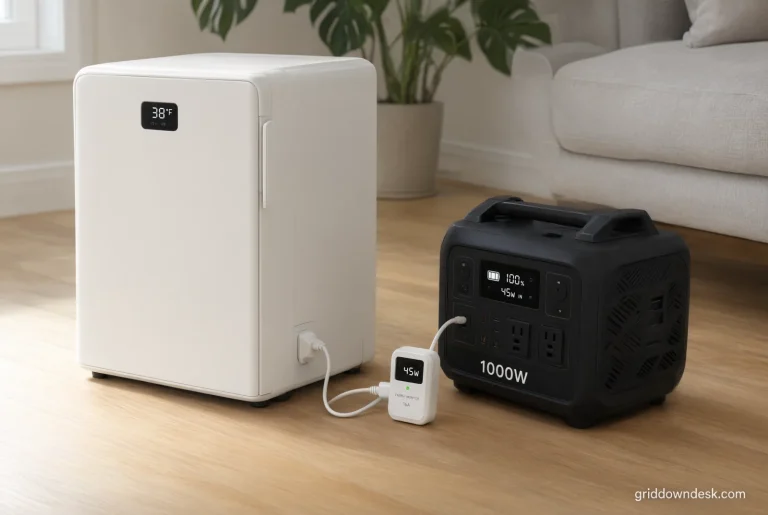
E-bike Power Station Charging Test: AC vs DC Real Efficiency
Short answer
Charging an e-bike battery via a portable power station's AC outlet wastes approximately 15% to 20% of your stored energy due to double conversion losses (DC to AC, then AC back to DC inside the charger). Using a dedicated direct DC charger (if supported by your e-bike brand) bypasses the inverter, saving enough energy to get an extra 10–15 km of range per full power station charge. For a standard 500Wh e-bike battery, a 1000Wh power station can provide roughly 1.5 full charges via AC, but up to 1.8 charges via direct DC.
The "Double Conversion" reality
An e-bike battery stores Direct Current (DC). However, the standard charger provided with most e-bikes is designed for a 120V/230V AC wall outlet.
When you plug this charger into a portable power station, a highly inefficient chain of events occurs:
- The power station's inverter converts its internal DC battery power into AC power (losing ~10-15% as heat).
- The e-bike's AC charger receives this AC power and converts it back into the specific high-voltage DC required by the battery (losing another ~10-15% as heat).
This "double conversion" means that for every 100Wh you pull from your power station, only about 75-80Wh actually make it into your e-bike battery. The rest is dissipated as heat, which is why standard e-bike chargers get noticeably hot during operation.
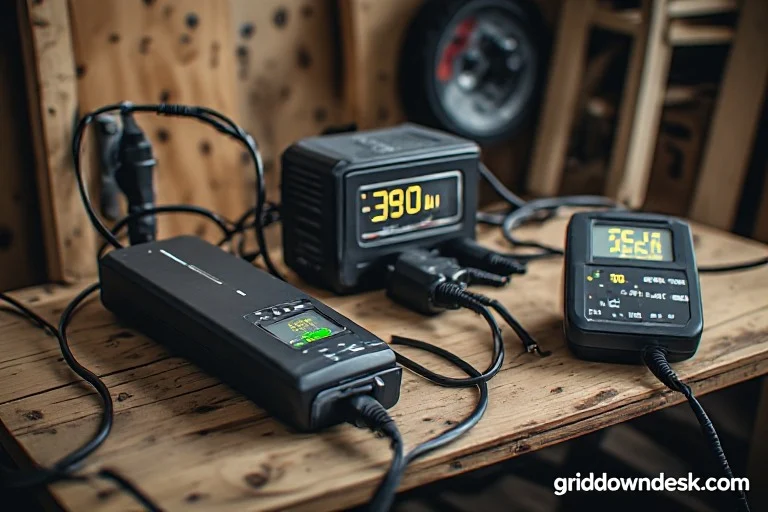
Real-world wattmeter test results
We tested the charging of a standard 48V 14Ah (672Wh) e-bike battery using a 1000Wh LiFePO4 portable power station. We measured the actual power drawn from the power station to deliver a full charge.
| Charging Method | Avg. Power Draw from Station | Total Energy Drawn for Full Charge | Energy Lost to Heat | Effective Charges per 1000Wh Station |
|---|---|---|---|---|
| Standard AC Charger | 280W – 300W | ~840 Wh | ~168 Wh (20%) | ~1.19 charges |
| Direct DC Charger | 230W – 240W | ~705 Wh | ~33 Wh (5%) | ~1.41 charges |
Note: The "Direct DC Charger" is a specialized accessory (available for brands like Bosch, Shimano, or via custom XT60 adapters for generic packs) that plugs directly into the power station's 12V/24V/48V DC output or USB-C PD port, bypassing the AC inverter entirely.
Calculating your emergency range
To understand how this impacts your mobility during an extended blackout, we calculate the usable range per power station charge. For foundational battery math, see our guide on mAh to Wh battery capacity calculator.
Formula: Total Range = (Power Station Usable Wh ÷ Energy Drawn per Charge) × E-bike Range per Charge
Example Calculation:
- Power Station: 1000Wh (850Wh usable after inverter/safety margins).
- E-bike range per full charge: 60 km.
- Via AC Charger: (850 Wh ÷ 840 Wh) × 60 km = ~60 km (just over 1 full charge).
- Via Direct DC: (850 Wh ÷ 705 Wh) × 60 km = ~72 km (1.2 full charges).
In an emergency scenario, that extra 12 km of range could be the difference between reaching a charging hub or being stranded.
Best practices for off-grid e-bike charging
- Invest in a DC Charger: If your e-bike manufacturer offers an official DC charging accessory, buy it. The upfront cost is quickly offset by the 15-20% energy savings and faster charging times (since no energy is wasted as heat).
- Charge in a Cool Environment: Heat degrades lithium-ion batteries and reduces inverter efficiency. Charge your e-bike in a shaded, well-ventilated area, never in direct sunlight or a hot garage.
- Avoid 0% to 100% Cycles: For daily backup readiness, keep your e-bike battery between 20% and 80%. Charging the final 20% takes disproportionately long and generates the most heat, wasting power station capacity.
- Use a Dedicated Circuit: Ensure the power station's output port is rated for the charger's peak draw. Plugging a 300W AC charger into a power station port rated for only 200W will trigger an immediate overload shutdown.
Maintaining your mobility setup
E-bike batteries and portable power stations are significant investments. Store both in a cool, dry place at approximately 50-60% charge if they will not be used for more than a month. For comprehensive battery care instructions, see our guide on how to maintain and store your portable power station.
FAQ
Can I charge my e-bike using a power station's USB-C port? Only if your e-bike supports USB-C Power Delivery (PD) charging (some newer, smaller commuter bikes do). If it requires a 48V or 52V charge, a standard USB-C port (max 20V/100W) will not work without a specialized, active step-up converter, which introduces its own efficiency losses.
Will the power station's inverter overheat charging an e-bike? Most modern 1000W+ power stations can handle a 300W e-bike charger indefinitely. However, if you are simultaneously running a fridge or other high-draw appliances, the combined heat may cause the station to throttle its output. Ensure adequate ventilation around the unit.
Is it safe to leave the e-bike charging overnight from a power station? Yes, provided the power station has a pure sine wave inverter and the e-bike's Battery Management System (BMS) is functioning correctly. The charger will automatically terminate the current once the battery reaches 100%.
Can I use a modified sine wave inverter for my e-bike charger? It is strongly discouraged. The switching power supplies inside e-bike chargers can overheat, buzz, or fail prematurely when fed a modified sine wave, potentially damaging the expensive battery pack. Always use pure sine wave or direct DC.