How to Maintain and Store Your Portable Power Station for Emergencies
Short answer
To maximize the lifespan of your portable power station, store it in a cool, dry place (ideally 15–25°C or 59–77°F) at a 60% to 80% state of charge. Check and top up the battery every 3 to 6 months. Avoid storing it at 0% or 100% for extended periods, and never leave it in a freezing car or a hot, unventilated garage.
Why proper storage matters
A portable power station is an emergency investment. If it sits neglected in a closet for two years, you may discover during a blackout that the battery has degraded, lost its capacity, or entered a protective sleep mode from which it cannot be awakened.
Lithium-ion batteries (both NMC and LiFePO4) undergo chemical stress when kept at extreme states of charge or exposed to extreme temperatures. Proper storage slows down this chemical degradation, ensuring your device delivers its rated watt-hours when you need it most.
The ideal storage environment
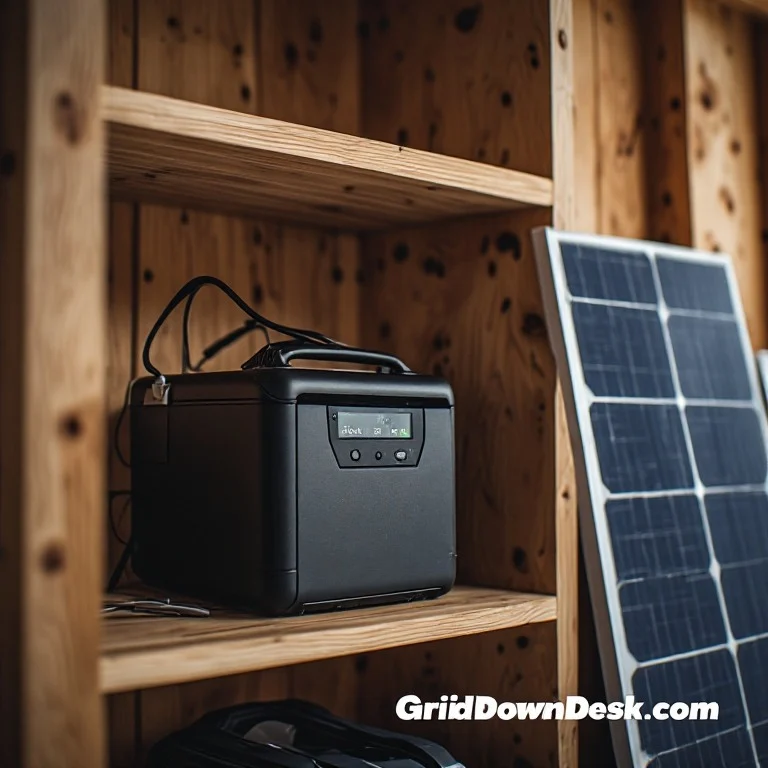
Where you keep your power station is just as important as how you charge it. Follow these environmental guidelines:
- Temperature: The sweet spot is 15–25°C (59–77°F). Temperatures above 30°C (86°F) accelerate chemical degradation. Temperatures below 0°C (32°F) can cause permanent damage to the battery cells if you attempt to charge them while frozen.
- Humidity: Keep the device in a dry environment with less than 60% relative humidity. Moisture can corrode the AC outlets, USB ports, and internal circuitry over time.
- Ventilation: Do not store the power station in an airtight plastic bin or a tightly sealed bag. It needs minimal airflow to prevent moisture buildup.
- Sunlight: Keep it out of direct sunlight. UV rays can degrade the plastic casing, and the greenhouse effect inside a room or vehicle can cause dangerous overheating.
The golden rule of charge level
Never store a lithium battery at 0% or 100% for long periods.
- At 0%: The battery management system (BMS) continues to draw a tiny amount of power (self-discharge). If the voltage drops below a critical threshold, the BMS will permanently lock the battery to prevent a fire hazard, effectively killing the unit.
- At 100%: Keeping the cells at maximum voltage creates high internal stress, which accelerates capacity loss, especially in warmer environments.
The target: Charge the unit to 60% to 80% before putting it into long-term storage. This is the most chemically stable state for lithium cells.
Maintenance schedule: The 3-to-6 month rule
Even when turned off, all portable power stations experience self-discharge, typically losing 2% to 5% of their charge per month.
To prevent the battery from dropping to a critically low level:
- Set a calendar reminder for every 3 to 6 months.
- Turn on the unit and check the display.
- If the charge has dropped below 50%, plug it into the wall or a solar panel and top it back up to 70–80%.
- Turn it off and return it to storage.
For more details on recharging options, see our guide on how to calculate solar panel needs for a power station.
LiFePO4 vs NMC: Storage differences
While the general rules apply to both, there are slight differences in chemistry:
| Feature | LiFePO4 (Lithium Iron Phosphate) | NMC (Lithium-ion) |
|---|---|---|
| Self-discharge rate | Very low (~2-3% per month) | Moderate (~3-5% per month) |
| Tolerance to 100% storage | Better, but still not recommended for long term | Poor, accelerates degradation significantly |
| Cold weather charging | Requires built-in heating pad (do not charge below 0°C) | Can accept a slow charge at slightly lower temps, but still risky |
| Overall storage lifespan | Excellent (10+ years with proper care) | Good (3-5 years with proper care) |
Safety precautions during storage
- Keep away from flammable materials: Although LiFePO4 is highly stable, it is still a best practice to store the unit on a non-flammable surface (like a metal shelf or concrete floor), away from paper, gasoline, or solvents.
- Child and pet safety: Store the unit out of reach of children and pets. The AC outlets and heavy weight pose a hazard.
- Inspect before use: Before relying on the unit during an emergency, visually inspect the casing for swelling, cracks, or corrosion on the ports. If the case is bulging, discontinue use immediately and contact the manufacturer.
FAQ
Can I leave my power station plugged into the wall all the time? Most modern units with LiFePO4 batteries support "pass-through charging" or UPS mode, which is safe for continuous plug-in use. The BMS will stop charging once the battery is full. However, for long-term storage (weeks or months without use), it is better to unplug it and store it at 70% charge.
What if my power station won't turn on after storage? If it was stored at a very low charge, the BMS may have entered a deep sleep protection mode. Plug it into a wall charger for at least 1–2 hours. The charging circuit can often "wake up" a sleeping BMS. If it still does not respond, the battery may be permanently degraded.
Should I store it with all the cables attached? No. Unplug all cables (AC, DC, solar, and car charging cables) before storage. Leaving cables plugged in can create a parasitic drain or pose a tripping hazard.
Does the inverter fan turn on during storage? No. The cooling fans only activate when the unit is charging, discharging, or if the internal temperature exceeds a safe threshold. A properly stored unit in a cool room will remain completely silent.
Can I store the power station in my car for emergencies? Only for short periods (e.g., a weekend camping trip). A car parked in the sun can easily exceed 60°C (140°F) inside, which will permanently damage the battery and void the warranty. In winter, freezing temperatures can also cause damage. Keep it in your climate-controlled home instead.