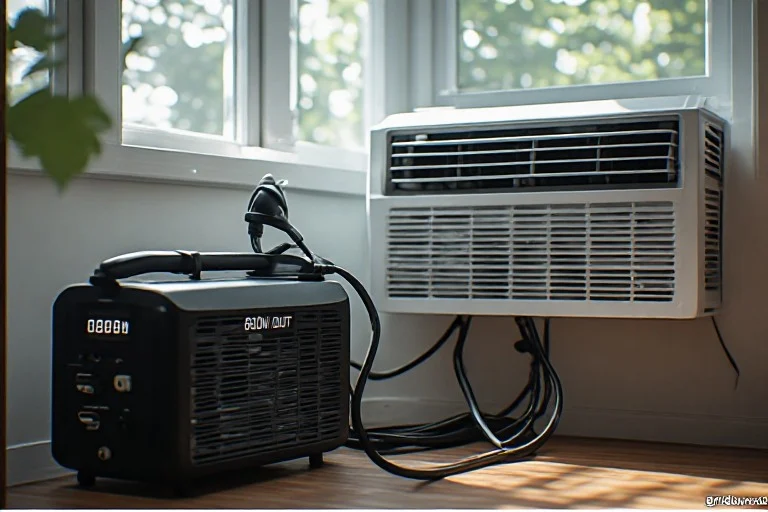
Powering a Mini Fridge on a Power Station Guide
Short answer
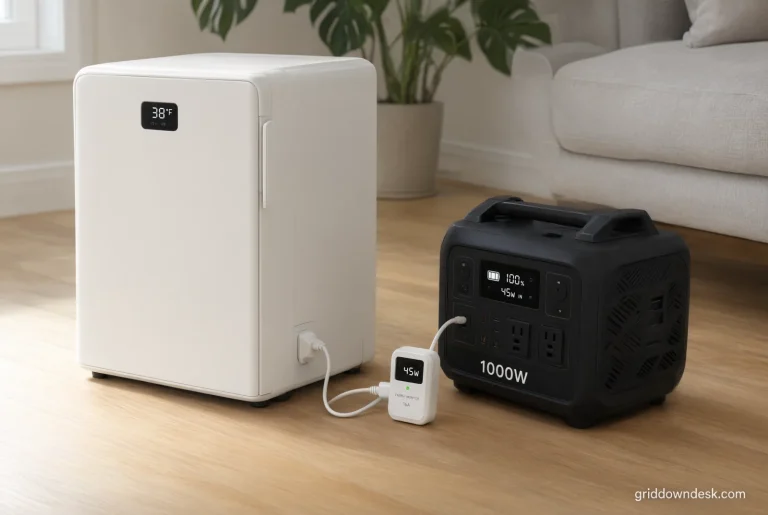
A standard 1.7 to 3.3 cubic foot mini fridge or a small chest freezer draws about 50W to 100W while the compressor is running. Because compressors cycle on and off (typically running 30% to 50% of the time), a 1000Wh portable power station can keep a mini fridge cold for approximately 2 to 4 days during a blackout, provided the door remains closed.
The compressor surge trap
The biggest mistake people make when sizing a power station for a refrigerator is looking only at the "running watts." Refrigerators and freezers contain electric motors (compressors) that require a massive spike of power for a fraction of a second to start spinning. This is called the starting or surge wattage.
A mini fridge that runs at 60W might require a surge of 300W to 500W to start. If your portable power station has a continuous output of 500W but a peak surge limit of only 600W, it might struggle or trip its overload protection when the compressor kicks in. Always choose a power station with a continuous output at least 2 to 3 times higher than the fridge's running wattage.
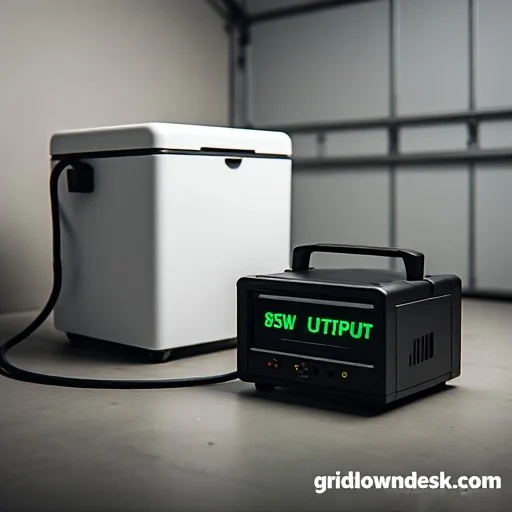
Real-world power consumption breakdown
Power draw varies based on the appliance type, age, and ambient temperature.
Typical power consumption:
- Mini Fridge (1.7 – 3.3 cu. ft.): 50W – 80W running, 250W – 400W surge.
- Small Chest Freezer (3.5 – 5 cu. ft.): 60W – 100W running, 300W – 500W surge.
- Standard Upright Refrigerator: 100W – 200W running, 800W – 1200W surge.
Note: Chest freezers are significantly more energy-efficient than upright fridges or mini fridges because cold air sinks and does not escape when the lid is opened.
Calculating the runtime (The Duty Cycle Factor)
Unlike a light bulb that draws constant power, a refrigerator compressor cycles on and off to maintain temperature. This is known as the "duty cycle." In a cool room with the door closed, a mini fridge might only run 15 minutes out of every hour (a 25% duty cycle).
To calculate realistic runtime, we adjust the standard formula. For a deeper explanation of the base math, see our guide on UPS runtime explained: VA vs watt-hours.
Adjusted Runtime (hours) = (Battery Capacity in Wh × 0.85) ÷ (Running Watts × Duty Cycle)
Example Calculation:
- You have a 1000Wh portable power station.
- Your mini fridge draws 60W when running.
- The duty cycle is 30% (0.30) in a cool basement.
- Effective average draw: 60W × 0.30 = 18W.
- Usable energy: 1000 × 0.85 = 850 Wh.
- Runtime: 850 Wh ÷ 18W = 47.2 hours (nearly 2 full days).
If the ambient temperature is hot (e.g., a garage in summer), the duty cycle may jump to 60-70%, cutting the runtime in half.
Best practices to maximize runtime
- Pre-chill the appliance: If you know a storm is coming, turn the fridge or freezer to its coldest setting 24 hours in advance. This creates a "thermal battery" of cold air and frozen contents, reducing the compressor's workload during the outage.
- Keep the door closed: Every time you open the door, cold air escapes, and the compressor must run continuously to replace it. Treat the contents as an emergency reserve.
- Fill empty space: A full freezer retains cold much better than an empty one. If your chest freezer is half-empty, fill the remaining space with jugs of water or towels to act as thermal mass.
- Ensure proper ventilation: Do not push the fridge flush against the wall. The compressor and condenser coils need airflow to dissipate heat. If they overheat, efficiency drops drastically.
Maintaining your backup readiness
A power station is only as reliable as its battery health. Lithium batteries slowly self-discharge when sitting idle. To ensure your system is ready to keep your food or medication safe when the grid fails, check the charge level every 3 to 6 months. For comprehensive battery care instructions, see our guide on how to maintain and store your portable power station.
FAQ
Can I use a modified sine wave inverter for a mini fridge? It is highly discouraged. While some older, simple compressors might tolerate it, modern fridges with variable-speed or inverter compressors can be permanently damaged by the harmonic distortion of a modified sine wave. Always use pure sine wave.
Will the power station recharge from solar while running the fridge? Yes, if the station supports pass-through charging. A 100W solar panel generating 60W in real-world conditions will nearly offset the 18W average draw of a well-insulated mini fridge, potentially keeping it running indefinitely during sunny days.
Can I power a standard home refrigerator? Yes, but you need a much larger power station (at least 2000Wh capacity) with a continuous output of 1500W+ to handle the massive startup surge of a full-size compressor.
Is it safe to run a power station in the garage with the fridge? Yes. Unlike gas generators, lithium portable power stations produce zero emissions and no carbon monoxide. They are perfectly safe for indoor or enclosed garage use, provided they are kept away from standing water.