CPAP Machine Battery Backup: How Long Will It Run?
Short answer
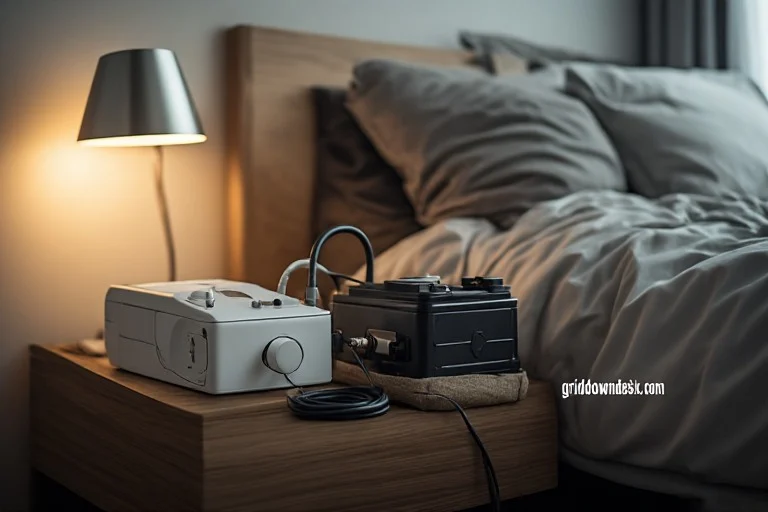
A standard CPAP machine without humidifier draws 30-60 watts and will run for 6-10 hours on a 300Wh portable power station. With humidifier enabled, power consumption jumps to 80-120 watts, reducing runtime to 2-4 hours. For a full night's sleep, you need at least 400-500Wh of usable battery capacity.
Why CPAP users need battery backup
If you rely on a CPAP machine for sleep apnea, a power outage is more than an inconvenience—it is a health risk. Going without CPAP therapy for even one night can cause severe fatigue, morning headaches, and increased blood pressure.
Most people assume their home UPS will keep their CPAP running, but a standard 600VA UPS with a single 12V 7Ah battery only provides about 84Wh of energy. That is enough for 45-90 minutes, not a full night's sleep.
CPAP power consumption: the real numbers
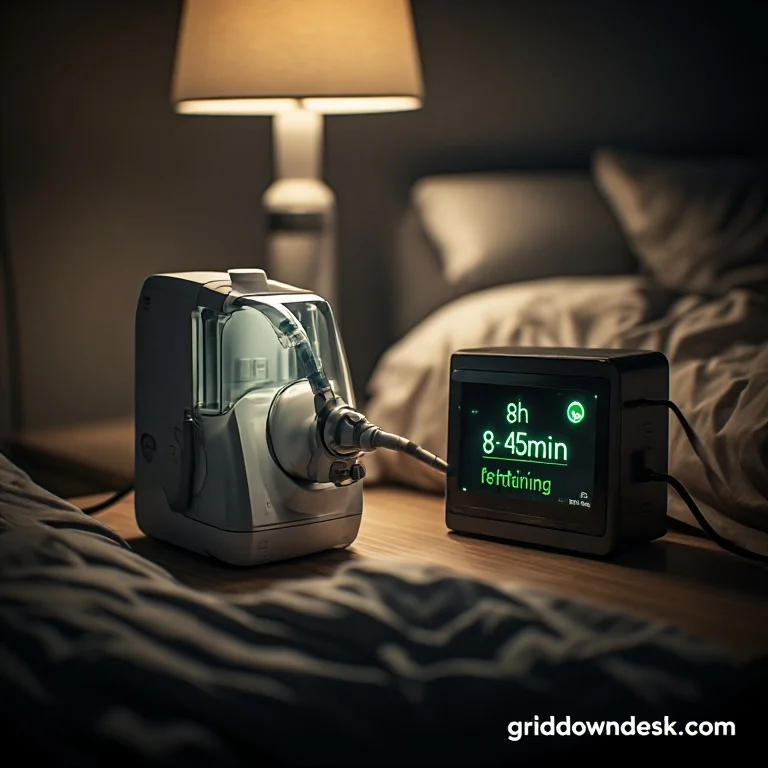
CPAP machines vary significantly in power draw depending on the model, pressure settings, and whether you use a heated humidifier.
Typical power consumption:
| Configuration | Wattage | 8-Hour Energy Need |
|---|---|---|
| CPAP without humidifier | 30-50 W | 240-400 Wh |
| CPAP with humidifier (low) | 70-90 W | 560-720 Wh |
| CPAP with humidifier (high) | 100-150 W | 800-1200 Wh |
| BiPAP without humidifier | 40-60 W | 320-480 Wh |
| BiPAP with humidifier | 90-120 W | 720-960 Wh |
The humidifier is the biggest power hog. It can triple your energy consumption. If battery runtime is critical, consider turning it off or using a passive humidification chamber.
The calculation formula
To determine how long your CPAP will run on battery backup:
Runtime (hours) = Battery Capacity (Wh) × Efficiency ÷ CPAP Wattage
- Battery Capacity: The total watt-hours of your power station or battery bank
- Efficiency: Account for inverter losses (0.85 for pure sine wave, 0.75 for modified sine wave)
- CPAP Wattage: Your machine's actual power draw (check the label or measure with a watt meter)
Example calculation:
You have a 500Wh portable power station and a CPAP machine that draws 40W without humidifier:
Runtime = 500 × 0.85 ÷ 40 = 10.6 hours
With humidifier at 100W:
Runtime = 500 × 0.85 ÷ 100 = 4.25 hours
Battery backup options
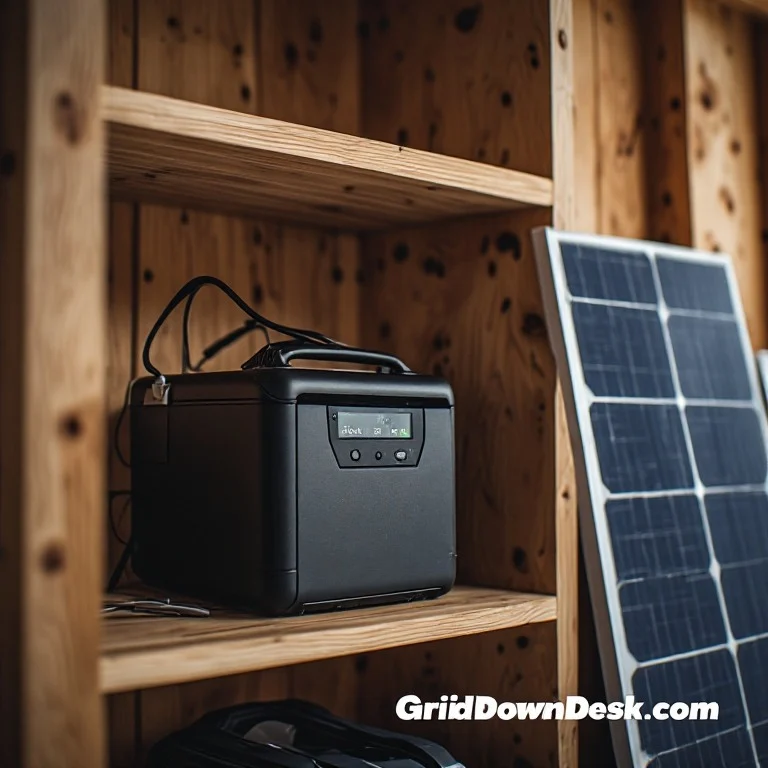
Option 1: Portable Power Station (Recommended)
Pros:
- Plug-and-play setup
- Pure sine wave output (safe for CPAP electronics)
- Multiple charging options (AC, solar, car)
- LCD display shows remaining runtime
- LiFePO4 models last 3000+ cycles
Cons:
- Higher upfront cost ($300-800)
- Heavier than dedicated CPAP batteries (5-15 lbs)
Recommended capacity: 300-500Wh for one night, 1000Wh+ for multi-day outages
Option 2: Dedicated CPAP Battery
Pros:
- Compact and lightweight (2-4 lbs)
- Designed specifically for CPAP machines
- DC output eliminates inverter losses
Cons:
- Expensive per watt-hour
- Limited capacity (100-200Wh typical)
- Only works with CPAP, not other devices
Runtime: 4-8 hours without humidifier
Option 3: Deep Cycle Battery + Inverter
Pros:
- Lowest cost per watt-hour
- Can run other devices
- Long runtime with large battery
Cons:
- Heavy and bulky
- Requires pure sine wave inverter
- Maintenance (for lead-acid)
- Safety concerns with improper wiring
Recommended: 12V 100Ah lithium battery (1280Wh) + 300W pure sine wave inverter
Critical considerations
Pure sine wave is mandatory
CPAP machines contain sensitive electronics and motors. A modified sine wave inverter can cause:
- Motor overheating and premature failure
- Unusual buzzing or humming sounds
- Inaccurate pressure delivery
- Voided warranty
Always use a pure sine wave inverter or a portable power station with pure sine wave AC output.
DC vs AC power
Some CPAP machines support 12V or 24V DC input. Using DC power directly (instead of AC through an inverter) eliminates the 10-15% energy loss from DC-to-AC conversion, extending your runtime by 15-20%.
Check your CPAP manual for DC input specifications. You will need a compatible DC cable or cigarette lighter adapter.
Humidifier alternatives
If you must conserve battery power:
- Turn off heated humidification completely
- Use a passive humidification chamber filled with room-temperature water
- Lower the humidity setting to the minimum comfortable level
- Use a heated tube only if necessary (it draws additional power)
For more details on sizing portable power stations, see our guide on how to choose the right portable power station.
Real-world runtime examples
Here are actual runtime estimates for popular CPAP machines on different battery configurations:
| CPAP Model | Power Draw | 300Wh Station | 500Wh Station | 1000Wh Station |
|---|---|---|---|---|
| ResMed AirSense 10 (no humid) | 35 W | 7.3 hours | 12.1 hours | 24.3 hours |
| ResMed AirSense 10 (humid low) | 80 W | 3.2 hours | 5.3 hours | 10.6 hours |
| Philips DreamStation (no humid) | 40 W | 6.4 hours | 10.6 hours | 21.3 hours |
| Philips DreamStation (humid high) | 110 W | 2.3 hours | 3.9 hours | 7.7 hours |
These calculations assume 85% inverter efficiency and do not include standby power draw.
FAQ
Can I use a car battery to power my CPAP? Yes, but you need a pure sine wave inverter. A standard car battery (50-70Ah) can run a 40W CPAP for 10-15 hours. However, deep-cycle batteries are better suited for repeated discharging.
Will my CPAP machine work with a modified sine wave inverter? Technically it may turn on, but it is not recommended. Modified sine wave can damage the motor, cause noise, and void your warranty. Always use pure sine wave for medical devices.
How do I find my CPAP's exact power consumption? Check the label on the power supply brick. It will list voltage and amperage (e.g., 12V 5A = 60W). For the most accurate measurement, use a plug-in watt meter between the wall and your CPAP for one night.
Can I charge the power station with solar panels during the day? Yes. A 100W solar panel receiving 5 peak sun hours will generate 300-400Wh per day, enough to recharge a CPAP battery for one night. This is ideal for camping or extended outages.
Is it safe to run CPAP from a battery overnight? Yes, as long as you use certified equipment (pure sine wave inverter or portable power station) and follow manufacturer guidelines. Ensure proper ventilation and do not cover the power station.
What happens if the battery runs out during the night? The CPAP will shut off immediately. Most modern machines will resume normal operation when power returns, but you will lose therapy for the remainder of the night. Size your battery with a 20-30% safety margin to avoid this.
Can I bring a portable power station with CPAP on a plane? Most airlines allow CPAP machines and batteries as medical devices. However, batteries over 100Wh require airline approval. Check with your carrier before traveling. Portable power stations over 160Wh typically cannot be taken on commercial flights.