Car Charging Power Stations: 12V DC Guide
Short answer
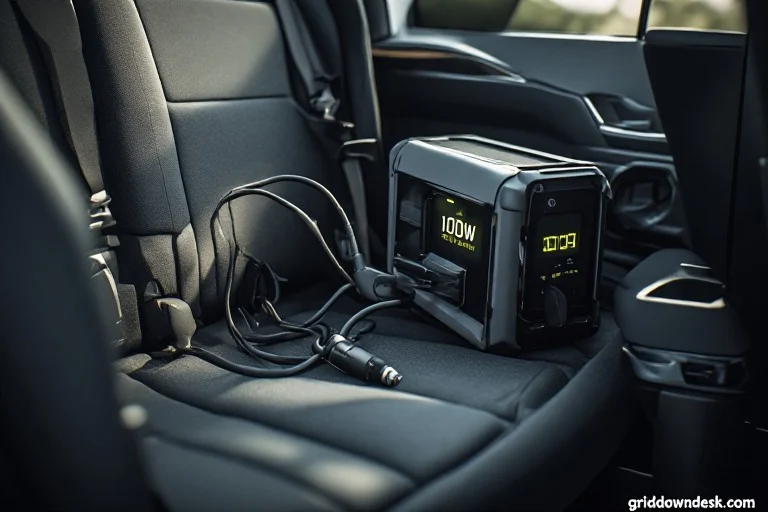
Yes, you can charge a portable power station in your car using the 12V DC cigarette lighter socket, but it is significantly slower than wall charging. Most vehicle 12V sockets are fused at 10A to 15A, limiting the charging speed to 100W–180W. A 1000Wh power station will take approximately 8 to 12 hours of continuous driving to charge from 0% to 100% via this method.
The alternator and fuse limit
A common misconception is that a car's electrical system can deliver massive amounts of power. While a modern alternator might produce 100A to 150A (1200W–1800W) total, this power is shared across the entire vehicle: engine management, lights, HVAC, and infotainment.
More importantly, the 12V accessory socket (cigarette lighter) is protected by a fuse, typically rated at 10 Amps or 15 Amps.
- 10A fuse limit: 12V × 10A = 120W maximum continuous draw.
- 15A fuse limit: 12V × 15A = 180W maximum continuous draw.
If your power station attempts to pull more than this (e.g., a 500W DC input), it will instantly blow the car's fuse, cutting power to the socket. Always check your vehicle's owner manual for the exact amperage rating of the 12V socket.
Calculating car charging time
To estimate how long a road trip will take to recharge your gear, we use a simplified version of the standard charging formula. For the complete math behind energy calculations, see our guide on UPS runtime explained: VA vs watt-hours.
Charge Time (hours) = Battery Capacity (Wh) ÷ (Car Socket Wattage × Efficiency)
Note: We use 0.90 for efficiency to account for minor losses in the DC-to-DC conversion and cable resistance.
Example Calculation:
- You have a 1000Wh power station.
- Your car's 12V socket is fused at 10A, delivering a maximum of 120W.
- Effective charging speed: 120W × 0.90 = 108W.
- Charge Time: 1000Wh ÷ 108W = ~9.2 hours.
This means a full cross-country drive is required to fully replenish a large power station from empty using only the standard 12V socket.
The role of DC-DC converters (MPPT)
Many premium portable power stations feature built-in MPPT (Maximum Power Point Tracking) charge controllers for their 12V input. This is highly beneficial. An MPPT controller dynamically adjusts the voltage and current to extract the maximum possible power from the car's electrical system without tripping the fuse.
If your power station does not have a built-in MPPT for car charging, you can purchase an aftermarket 12V-to-12V DC-DC charger. These devices safely step up or regulate the voltage, ensuring a stable, multi-stage charging profile that is healthier for the power station's lithium battery than a raw, unregulated connection.
For more details on sizing your gear for off-grid trips, refer to our guide on power station for camping and fishing sizing.
Critical safety rules for car charging
- Always keep the engine running: Charging a large battery from a car's alternator places a significant load on the system. If the engine is off, you will rapidly drain the vehicle's starter battery, leaving you stranded. A dead car battery cannot be jump-started by a portable power station's 12V output (they lack the cold cranking amps required).
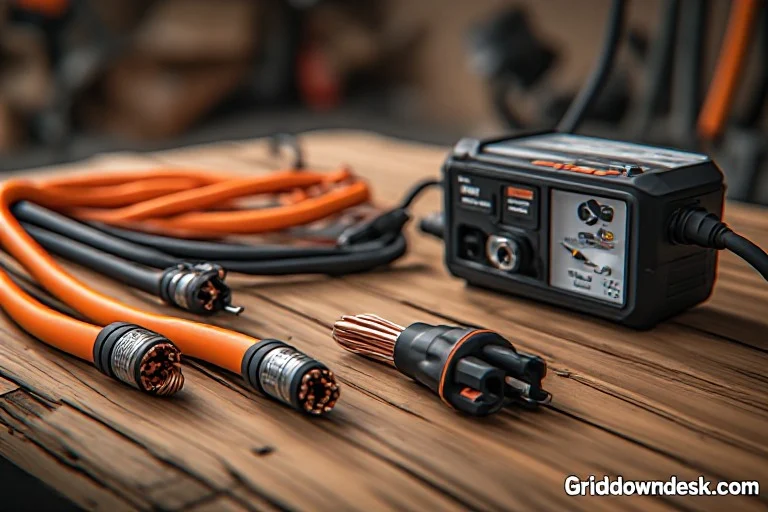
- Use high-quality, thick cables: The included 12V car charging cable is specifically gauged to handle the maximum safe current. Do not replace it with a thin, generic wire, as it will overheat, melt, and potentially cause a vehicle fire.
- Monitor for blown fuses: If the power station suddenly stops charging, check the car's 12V socket fuse first. Keep spare automotive blade fuses (ATO/ATC) in your glovebox.
- Ensure proper ventilation: Do not seal the power station in an airtight trunk while it is charging. The internal battery management system (BMS) and charging circuitry generate heat that must dissipate.
Maintaining your mobile power setup
Frequent vibration and temperature swings in a vehicle can stress battery connections over time. Periodically inspect the 12V charging cable for frayed wires or loose connectors. Additionally, remember that extreme heat (a car parked in the summer sun) degrades lithium batteries. For comprehensive battery care instructions, see our guide on how to maintain and store your portable power station.
FAQ
Can I hardwire the power station directly to the car battery for faster charging? Yes, using alligator clips connected directly to the vehicle's battery terminals bypasses the 10A/15A socket fuse, allowing for higher amperage (often up to 20A or 240W, depending on the station). However, this should only be done with a proper DC-DC charger that prevents overcharging the vehicle's starter battery.
Will charging the power station damage my car's alternator? Modern alternators are designed to handle sustained loads (like running headlights, AC, and heated seats simultaneously). Charging a power station at 100W–150W is well within the safe operating limits of any healthy vehicle alternator and will not cause premature wear.
Can I use the power station to jump-start my car? No, unless the manufacturer explicitly markets it as a "Jump Starter" with dedicated heavy-duty clamps and high Cold Cranking Amps (CCA). Standard portable power station 12V outputs are limited to 10A and cannot provide the 300A+ surge required to turn over a car engine.
Is it better to charge via 12V DC or a 100W solar panel on the road? They are often comparable in speed (both delivering roughly 80W–100W in real-world conditions). However, solar charging does not consume fuel or put load on the alternator, making it the superior choice for multi-day off-grid camping.