12V DC vs 120V AC: Real Inverter Efficiency Test
Short answer
Using the 12V DC ports on your portable power station instead of the 120V AC outlets saves approximately 10% to 15% of your total battery capacity. This "inverter tax" occurs because converting DC battery power to AC, only for the device to convert it back to DC internally, wastes energy as heat. For extended off-grid trips or blackouts, prioritizing 12V DC or USB-C connections is the single most effective way to extend your runtime.
The "Inverter Tax" reality
Many portable appliances (like 12V fridges, LED lights, and laptop chargers) natively run on Direct Current (DC). When you plug them into the AC outlet of a power station, a double conversion occurs:
- The power station's inverter converts 12V/24V DC from the battery into 120V AC (losing ~10-15% efficiency).
- The appliance's internal power brick converts that 120V AC back down to 5V, 12V, or 19V DC (losing another ~5-10% efficiency).
This double conversion is the "inverter tax." By plugging the device directly into a 12V DC port or a USB-C Power Delivery (PD) port, you eliminate the first conversion step entirely, delivering power directly to the device with ~95% efficiency.
Real-world wattmeter test results
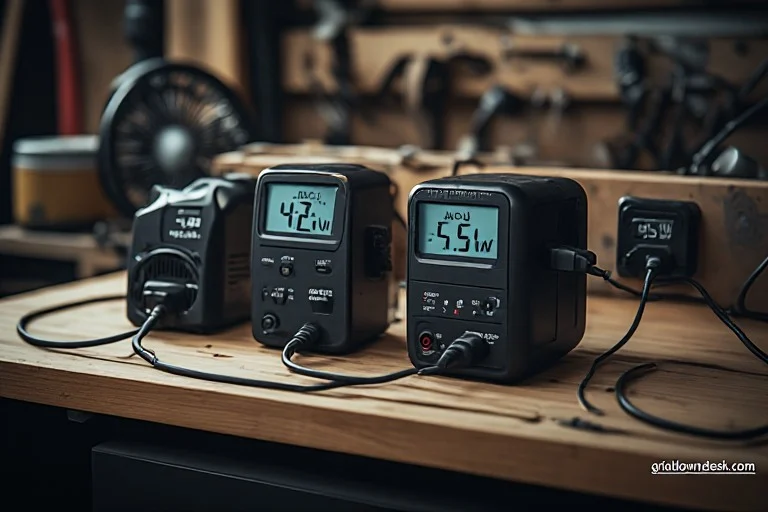
We tested three common camping and blackout appliances, measuring the actual power drawn from the power station's battery in both configurations.
| Appliance | Target Device Power | Draw via 120V AC Outlet | Draw via 12V DC Port | Efficiency Loss (Inverter Tax) |
|---|---|---|---|---|
| 12V Portable Fridge | 40W (compressor on) | 48W – 52W | 42W – 44W | ~12% loss |
| 12V LED Camping Light | 10W | 13W – 14W | 10.5W – 11W | ~18% loss |
| Laptop (via 65W Brick) | 45W (avg load) | 52W – 55W | 48W (via USB-C PD) | ~10% loss |
Note: Inverter efficiency is not linear. Inverters are least efficient at very low loads (under 20W), which is why the LED light shows a higher percentage loss. At higher loads (100W+), inverter efficiency typically peaks at 85-90%.
Calculating your real-world savings
To understand how this impacts your blackout or camping trip, we apply the standard runtime formula. For the foundational math, see our guide on home backup power calculator sizing.
Scenario: Running a 12V Fridge for 24 hours (Average 40W load = 960Wh/day)
- Using 120V AC (85% inverter efficiency):
960Wh ÷ 0.85 = 1,129 Wh drawn from the battery.
- Using 12V DC (95% direct efficiency):
960Wh ÷ 0.95 = 1,010 Wh drawn from the battery.
Total Savings: 119 Wh per day. Over a 3-day trip, this saves 357 Wh—which is equivalent to an entire extra day of runtime on a standard 500Wh power station, achieved simply by changing which port you use.
Best practices for minimizing energy loss
- Audit your gear for DC options: Before a trip, check if your devices can be powered via USB-C PD or a 12V barrel jack. Many modern laptops, cameras, and routers support this.
- Turn off the AC inverter when not in use: The inverter itself consumes "idle power" (typically 5W to 15W) just by being turned on, even if nothing is plugged into it. Over 24 hours, this idle drain wastes 120Wh to 360Wh. Only turn the AC outlets on when actively charging an AC-only device.
- Use high-quality DC cables: A thin, cheap 12V extension cord introduces resistance, causing voltage drop that negates the efficiency gains of bypassing the inverter. Use thick, short cables rated for your device's amperage.
- Beware of "Car Inverters": Do not plug a cheap 12V-to-120V car inverter into your power station's 12V port to run AC devices. These cheap inverters often have efficiencies as low as 70%, making them far worse than the power station's built-in pure sine wave inverter.
Maintaining your power station for optimal efficiency
As power stations age, their internal components, including the inverter, can experience slight efficiency degradation. Keeping the unit clean, cool, and properly charged ensures it operates at its peak rated efficiency. For comprehensive battery and system care instructions, see our guide on how to maintain and store your portable power station.
FAQ
Does the inverter tax apply to pure sine wave and modified sine wave equally? Yes, both types of inverters experience conversion losses. However, pure sine wave inverters generally operate at the higher end of the efficiency spectrum (85-90%) and are safer for sensitive electronics, making them the superior choice despite the inherent physics of DC-to-AC conversion.
Is USB-C Power Delivery (PD) more efficient than the 12V car port? They are very similar, both typically achieving 90-95% efficiency. USB-C PD has the added advantage of negotiating the exact voltage and current with your device, preventing the over-voltage or under-voltage issues that can sometimes occur with generic 12V barrel jack adapters.
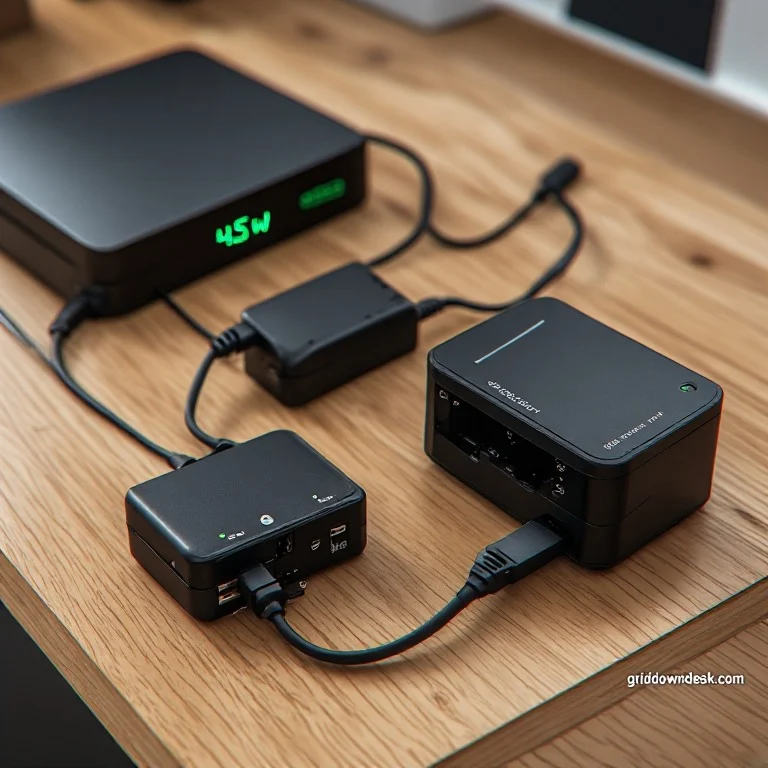
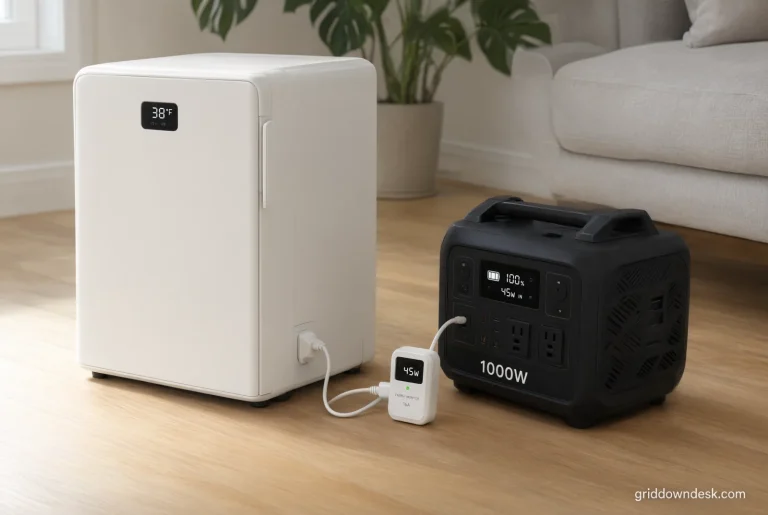
Why does my power station show a higher wattage on its screen than my device's label? The power station's display shows the power being drawn from the battery, which includes the inverter's efficiency loss and idle consumption. Your device's label shows the power it consumes after its own internal power brick has done its conversion. The inline wattmeter test above proves this discrepancy.
Can I leave the 12V port on all the time without draining the battery? Most modern power stations do not have significant idle drain on their 12V or USB ports when no device is actively drawing current. However, it is still best practice to turn off all outputs when the station is in storage to prevent any micro-drain from the control board.