Pure Sine Wave vs Modified Sine Wave Guide
Short answer
A pure sine wave inverter produces clean, utility-grade electricity that is safe for all electronic devices, including laptops, medical equipment, and appliances with motors. A modified sine wave inverter produces a choppy, stepped electrical signal that is cheaper but can cause sensitive electronics to overheat, malfunction, or fail prematurely. For any home backup setup, pure sine wave is highly recommended.
What is a Modified Sine Wave?
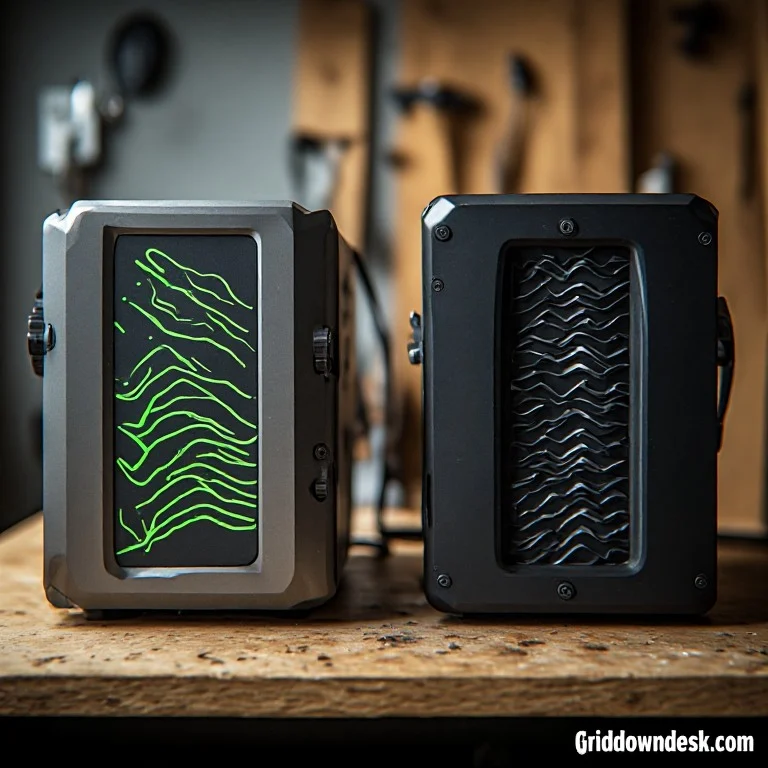
A modified sine wave (also called a simulated or stepped sine wave) inverter approximates a sine wave by producing a blocky, square-like waveform. It switches the voltage abruptly between positive, negative, and zero.
Pros:
- Significantly cheaper to manufacture.
- Lighter and sometimes more compact.
- Perfectly adequate for simple resistive loads like incandescent light bulbs or basic heating elements.
Cons:
- Creates electrical noise and harmonic distortion.
- Causes inductive loads (motors, transformers, compressors) to run 10% to 20% hotter and less efficiently.
- Can produce an audible buzzing sound in audio equipment, fans, and fluorescent lights.
- May trigger error codes or prevent sensitive electronics from turning on at all.
What is a Pure Sine Wave?
A pure sine wave inverter replicates the smooth, continuous oscillating waveform of standard utility grid power (or even better, with less distortion).
Pros:
- 100% safe for all electronic devices, including sensitive microprocessors.
- Motors and compressors run cooler, quieter, and with maximum efficiency.
- No harmonic distortion or electrical noise.
- Required by the warranty terms of many modern appliance manufacturers.
Cons:
- More expensive due to complex circuitry.
- Slightly heavier due to larger transformers and heat sinks.
Device compatibility chart
Before connecting any device to a modified sine wave inverter, check this compatibility guide. When in doubt, always choose pure sine wave.
| Device Type | Modified Sine Wave | Pure Sine Wave |
|---|---|---|
| Incandescent light bulbs | ✅ Works fine | ✅ Works perfectly |
| Simple phone chargers | ✅ Usually works | ✅ Works perfectly |
| Laptop power bricks | ⚠️ May overheat/buzz | ✅ Works perfectly |
| LED/CFL light bulbs | ⚠️ May flicker or buzz | ✅ Works perfectly |
| Desktop computers | ❌ Risk of PSU damage | ✅ Works perfectly |
| CPAP machines | ❌ Void warranty, motor damage | ✅ Required |
| Refrigerators / Freezers | ❌ Compressor overheating | ✅ Works perfectly |
| Laser printers | ❌ High surge, will overload | ✅ Works perfectly |
| Audio/Video equipment | ❌ Severe humming/buzzing | ✅ Works perfectly |
The hidden cost of modified sine wave
While a modified sine wave inverter is cheaper upfront, it can cost you more in the long run. Because the choppy waveform is less efficient for inductive loads, a refrigerator compressor or a UPS transformer will draw more current to do the same amount of work.
As we detailed in our guide on UPS runtime explained: VA vs watt-hours, inefficiency directly drains your battery faster. A motor running on modified sine wave may draw 15% more power and run significantly hotter, shortening the lifespan of both the appliance and your battery backup.
For long-term reliability and to protect your investment, refer to our best practices in how to maintain and store your portable power station.
How to check what your device needs
- Read the label: Look at the power brick or the back of the appliance. If it says "Input: 100-240V AC, 50/60Hz", it expects a clean sine wave.
- Check the manual: Medical devices (like CPAP machines) and high-end audio equipment explicitly state "Pure Sine Wave Required" in their specifications.
- Listen and feel: If you plug a device into a modified sine wave inverter and it buzzes loudly or the power brick becomes unusually hot to the touch, unplug it immediately.
FAQ
Will a modified sine wave inverter destroy my laptop? Not necessarily "destroy" it instantly, but the switching power supply inside the laptop brick will work harder to smooth out the choppy power. This generates excess heat, which degrades the capacitors inside the brick over time, leading to premature failure.
Can I use a modified sine wave inverter for a sump pump? It is risky. Sump pumps use induction motors. A modified sine wave will cause the motor to run hotter and less efficiently. During a prolonged storm, this extra heat could cause the motor to trip its thermal overload protector, leaving your basement unprotected.
Do all portable power stations have pure sine wave? No. While most reputable brands (like EcoFlow, Bluetti, Jackery) use pure sine wave inverters in their modern units, some ultra-budget or very old models still use modified sine wave. Always check the specifications sheet before buying.
Is pure sine wave required for a Wi-Fi router? Strictly speaking, no. A router's simple switching power supply can usually handle modified sine wave. However, since a router is critical for communication during an outage, using a reliable pure sine wave source (or a dedicated 12V DC mini UPS) eliminates any risk of unexpected reboots or power supply failure.