Oxygen Concentrator Blackout Power Guide
Short answer
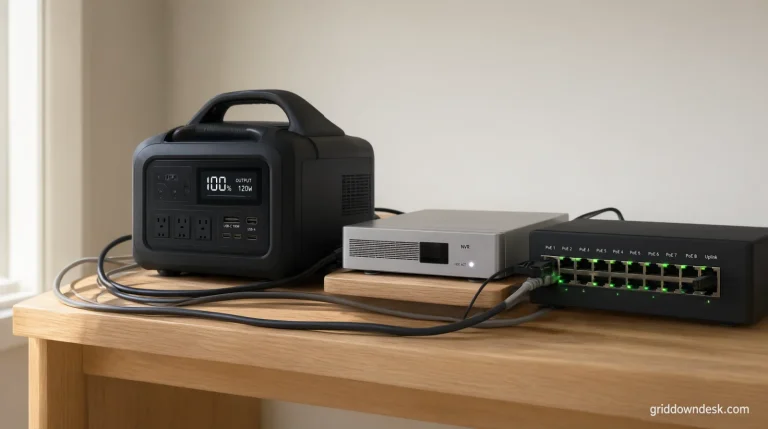
To safely power a home oxygen concentrator during a blackout, you must use a pure sine wave portable power station or UPS with a continuous output of at least 600W to 800W. A typical 5-liter stationary concentrator draws 300W to 400W continuously. A 1000Wh pure sine wave power station will provide approximately 2 to 2.5 hours of uninterrupted oxygen flow, making it a critical, short-term bridge until a generator or grid power is restored.
The medical reality: 100% duty cycle
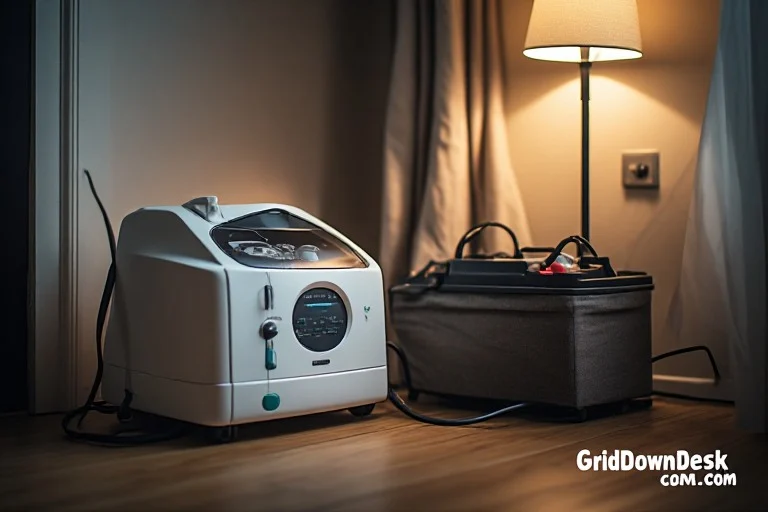
Unlike a refrigerator that cycles on and off, or a laptop that can have its screen dimmed, an oxygen concentrator is a life-support device. It must run continuously at a 100% duty cycle to maintain the prescribed liters per minute (LPM) of oxygen.
There is no room for "power-saving modes" or temporary shutdowns. Furthermore, the internal air compressor and sieve beds require clean, stable power. Using an incorrect power source can cause the machine to alarm, shut down, or deliver oxygen at an incorrect concentration, posing a severe health risk to the patient.
Real-world power consumption by flow rate
Power draw increases with the required oxygen flow rate, as the internal compressor must work harder to maintain pressure. Always check the rating label on the back of your specific machine.
Typical power consumption (Stationary 5L to 10L Concentrators):
- At 1-2 LPM: 250W – 300W continuous.
- At 3-5 LPM (Most Common): 300W – 400W continuous.
- At 8-10 LPM: 450W – 600W continuous.
- Startup Surge: 500W – 800W (brief spike when the compressor first engages).
Note: Portable Oxygen Concentrators (POCs) that run on internal batteries are different. They typically draw only 30W to 60W and can often be powered directly via 12V DC or high-wattage USB-C, lasting much longer on the same battery capacity.
Calculating your critical runtime
Because the device runs continuously, we calculate runtime based on a 100% duty cycle. For the foundational math, see our guide on home backup power calculator sizing.
Runtime (hours) = (Battery Capacity in Wh × 0.85) ÷ Continuous Watts
Note: We use 0.85 efficiency for the AC inverter. Do not attempt to use modified sine wave inverters.
Example Calculation (Standard 5L Concentrator at 3 LPM):
- Continuous draw: 350W.
- Power source: 1000Wh pure sine wave portable power station.
- Usable energy: 1000 Wh × 0.85 = 850 Wh.
- Runtime: 850 Wh ÷ 350W = ~2.4 hours.
While 2.4 hours may seem short, it is specifically designed to bridge the gap during brief grid flickers or to provide enough time to safely start a standby propane/natural gas generator.
Best practices for medical backup safety
- Pure Sine Wave is Non-Negotiable: Medical compressors and sensitive oxygen sensors are easily damaged by the harmonic distortion of modified sine wave inverters. This can lead to motor overheating, erratic alarms, or failure to trigger the "low power" alarm correctly.
- Test the Setup in Advance: Do not wait for a blackout to test your equipment. Plug the concentrator into the powered-on backup unit, ensure it runs quietly without error codes, and verify that the machine's own low-power alarm functions correctly when the backup battery drops to 20%.
- Keep the Backup Fully Charged: Medical backup power stations should be kept plugged into the wall at all times (passthrough charging) so they are always at 100% readiness.
- Have a Secondary Plan: Because battery capacity is limited, always have a secondary backup plan. This could be a standby whole-home generator, a secondary charged power station ready to swap, or an evacuation plan to a location with reliable power. Consult your healthcare provider about your specific backup needs.
Maintaining your medical readiness
A medical backup system cannot be allowed to fail. Check the power station's battery health and self-test features monthly. Ensure the unit is kept in a well-ventilated area, as both the concentrator and the power station generate heat during simultaneous operation. For comprehensive battery care instructions, see our guide on how to maintain and store your portable power station.
FAQ
Can I use a CPAP backup battery for my oxygen concentrator? Generally, no. CPAP batteries are designed for 30W-60W loads. An oxygen concentrator draws 300W+, which will instantly overload and shut down a CPAP-specific battery pack. You need a full-sized portable power station or medical-grade UPS.
Will the concentrator alarm when running on battery power? Most modern concentrators are designed to recognize stable AC power from a UPS or power station and will not trigger a "power failure" alarm. However, they will trigger a "low battery" alarm when the power station itself drops below a certain threshold (usually 20%). This is a helpful warning to switch power sources.
Can I run the concentrator and a refrigerator on the same power station? Only if the power station is very large (e.g., 2000Wh+ with 2000W+ continuous output). The combined load of a running concentrator (350W) and a refrigerator compressor startup surge (1200W+) will trip the overload protection on smaller units, cutting off oxygen to the patient. Dedicate the backup unit solely to the medical device.
Is it safe to leave the power station plugged into the wall while the concentrator is running from it? Yes. This is called "passthrough charging" or UPS mode. The power station will power the concentrator directly from the wall while keeping its internal battery at 100%. If the grid fails, it will switch to battery power instantly (typically within 10-20 milliseconds), which is fast enough that the concentrator will not shut down or alarm.