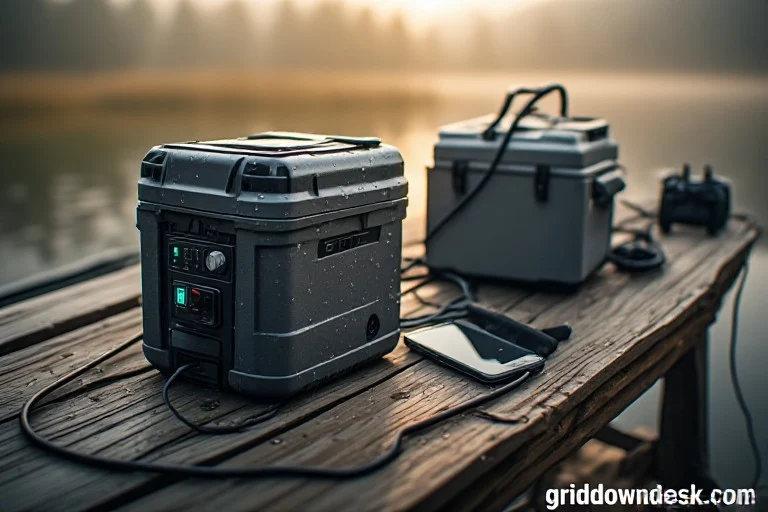
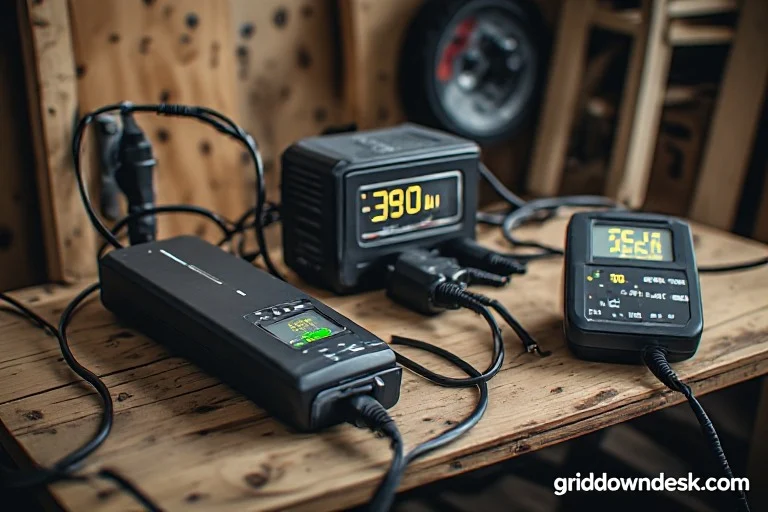
LiFePO4 vs Car Battery: 12V Fridge Real-World Test
Short answer
In real-world testing, a 12V compressor fridge draws approximately 30W to 50W per day. While a standard car starter battery can technically power it for 10-15 hours, doing so risks discharging the battery below 11.5V, which can permanently damage the battery and leave you unable to start the engine. A dedicated 300Wh LiFePO4 portable power station will safely run the same fridge for 5 to 7 days without any risk to your vehicle, making it the only reliable choice for overnight or multi-day off-grid use.
The "Starter Battery" myth
A common misconception among campers and preppers is that a car battery is a "free" and robust source of backup power. While it is true that a fully charged 60Ah car battery holds roughly 720Wh of theoretical energy, it is fundamentally designed for one purpose: delivering a massive 300A+ burst of current for 3 seconds to crank the engine, and then being immediately recharged by the alternator.
Car batteries (flooded lead-acid or standard AGM) are not designed for deep cycling. Discharging a starter battery below 50% of its capacity (roughly 12.2V) begins to cause sulfation, permanently reducing its ability to hold a charge. Discharging it below 11.5V to run a fridge overnight can kill the battery entirely, leaving you stranded.
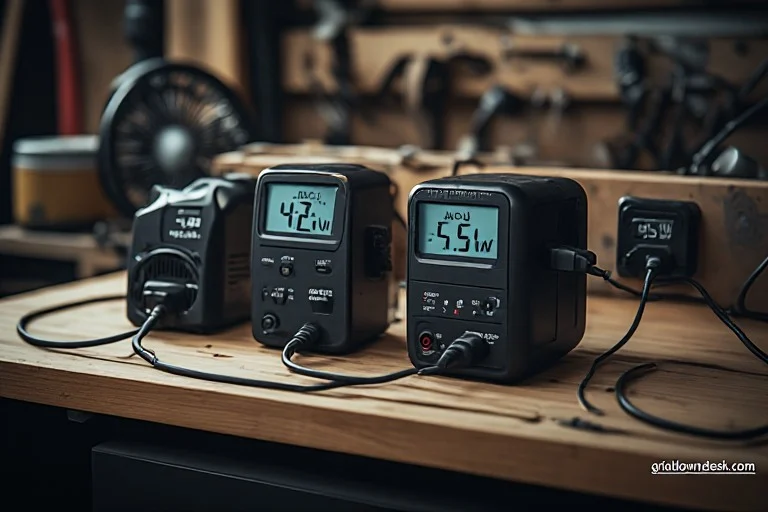
Real-world wattmeter test results
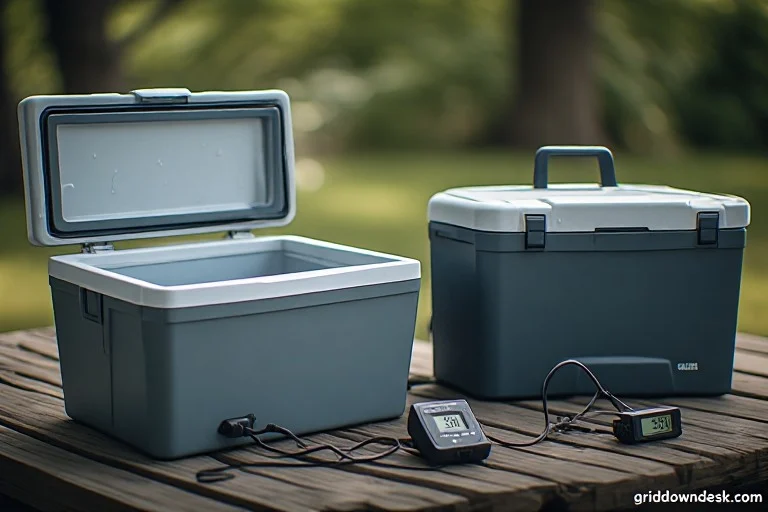
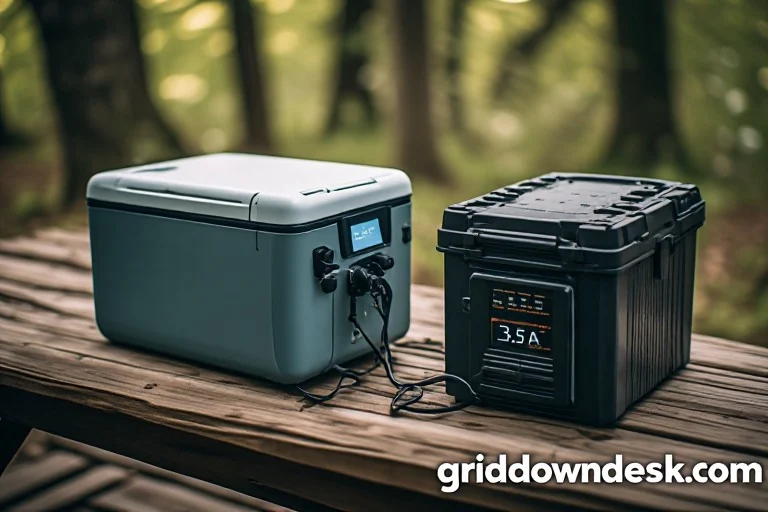
We connected a standard 35L 12V compressor fridge to both a 60Ah car battery and a 300Wh LiFePO4 portable power station in a controlled 25°C (77°F) environment, maintaining an internal temperature of 4°C (39°F).
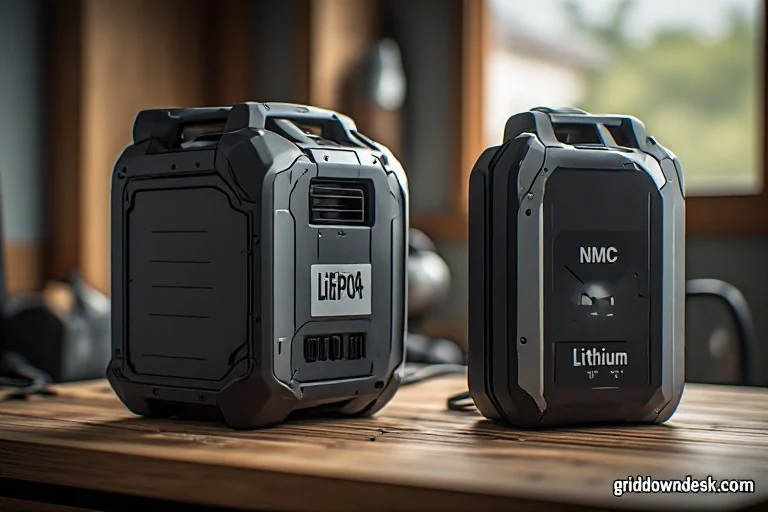
| Metric | 60Ah Car Battery (Starter) | 300Wh LiFePO4 Power Station |
|---|---|---|
| Fridge Avg. Draw | 40W (3.3A @ 12V) | 40W (3.3A @ 12V) |
| Voltage Sag under Load | Drops to 11.8V – 12.0V | Stable at 12.8V – 13.0V |
| Usable Capacity (Safe Limit) | ~300Wh (50% Depth of Discharge) | ~255Wh (85% Depth of Discharge) |
| Estimated Fridge Runtime | 6 to 8 hours (before risking engine start) | 5 to 6 days (continuous cycling) |
| Long-term Battery Damage Risk | High (if discharged below 50%) | None (rated for 3000+ cycles at 80% DoD) |
Note: As the car battery voltage drops below 12.0V, the fridge's internal low-voltage cutoff (LVC) may trigger prematurely, shutting off the fridge to "protect" the battery, even though the battery is not yet completely empty.
Calculating the true cost of ownership
As detailed in our generator vs power station TCO calculator, the upfront cost is only part of the equation.
- Car Battery Route: A "free" car battery seems cheap, but prematurely killing a $100-$150 battery every camping season, plus the potential cost of a tow truck, makes this the most expensive option.
- LiFePO4 Route: A $300 300Wh power station provides 5+ days of fridge runtime. Over 5 years of regular use, the cost per day of cooling is fractions of a cent, with zero risk to your vehicle's mobility.
Best practices for off-grid cooling
- Never use the cigarette lighter port for high draw: If you must test a car battery, use heavy-duty alligator clips directly to the battery terminals. The vehicle's 10A-15A cigarette lighter fuse will blow instantly under the compressor's startup surge.
- Set the fridge LVC to "High": If you are forced to use a car battery in an absolute emergency, set the fridge's Low Voltage Cutoff to "High" (typically 11.4V – 11.7V). This sacrifices some cooling time but prioritizes saving enough juice to start the engine.
- Pre-chill everything: Before disconnecting from grid power or the vehicle's alternator, plug the fridge into the wall or car for 12 hours. Load it with pre-chilled food and frozen water jugs. This minimizes the compressor's initial workload.
- Insulate the setup: Keep the fridge in the shade and wrap it in a reflective emergency blanket if ambient temperatures exceed 30°C (86°F). This reduces the compressor's duty cycle, directly extending battery life.
For a deeper dive into why compressor fridges vastly outperform thermoelectric coolers in these scenarios, refer to our compressor vs thermoelectric cooler power test.
Maintaining your cooling investment
Whether you use a dedicated power station or a secondary deep-cycle AGM battery, regular maintenance is key. Keep terminals clean and tight to prevent voltage drop. For comprehensive battery care instructions to maximize the lifespan of your LiFePO4 investment, see our guide on how to maintain and store your portable power station.
FAQ
Can I add a second "deep cycle" battery to my car for the fridge? Yes, this is the traditional RV solution. A dual-battery isolator (or DC-DC charger) allows the alternator to charge both batteries while driving, but isolates the fridge battery when the engine is off. However, a modern LiFePO4 portable power station is lighter, requires no wiring, and offers a better depth of discharge.
Why does my fridge keep beeping and turning off when connected to the car battery? The compressor's startup surge causes a temporary voltage sag in the car battery. The fridge's sensitive electronics detect this drop (e.g., below 11.5V) and trigger the low-voltage alarm, assuming the battery is dying, even if the battery is actually at 80% capacity.
Will a LiFePO4 power station charge from my car while driving? Yes, via the 12V socket. However, it is slow (capped at ~100W-150W by the vehicle's fuse). It is best used as a supplementary top-up during long drives, not as the primary charging method.
Is it safe to keep a LiFePO4 power station in the car overnight? Yes, provided the ambient temperature does not drop below freezing (0°C / 32°F). Charging a frozen LiFePO4 battery causes permanent damage. If camping in freezing temperatures, bring the power station inside the tent or vehicle cabin overnight.