RV and Van Life Power Station Sizing Guide
Short answer
For typical van life or RV boondocking, a portable power station with 500Wh to 1000Wh capacity is the sweet spot. By powering 12V DC appliances (like a portable fridge) directly and using LED lighting, this capacity can easily sustain a solo traveler or couple for 2 to 4 days off-grid, provided you have a 100W to 200W solar panel for daily replenishment.
The Van Life power reality: DC vs AC
The biggest mistake new van lifers make is trying to power everything through the power station's AC inverter. Converting 12V battery power to 120V/230V AC and then back down to 12V or 5V inside your devices wastes 15% to 20% of your total energy as heat.
The golden rule of off-grid living is: Use DC power whenever possible.
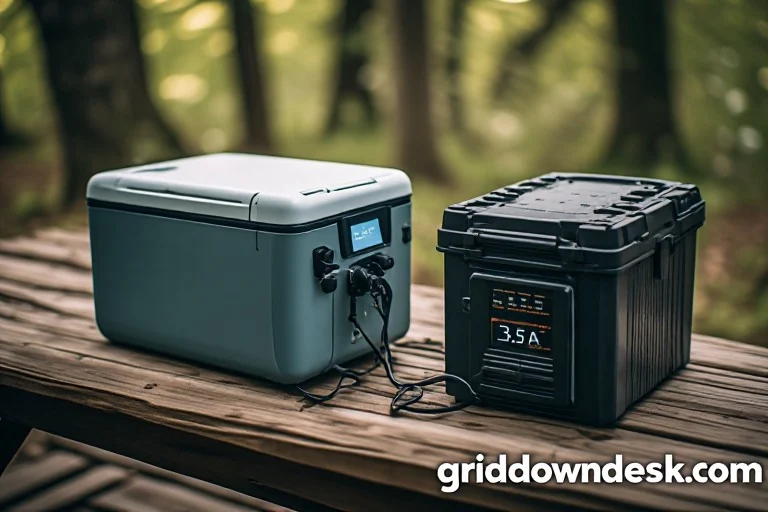
- Plug your 12V portable fridge directly into the power station's 12V cigarette lighter port.
- Charge laptops, phones, and cameras via USB-C Power Delivery (PD).
- Reserve the AC outlets strictly for devices that absolutely require them, like a laptop power brick that doesn't support USB-C or a small coffee grinder.
Real-world daily power consumption breakdown
To size your system, you must calculate your daily Watt-hour (Wh) needs. For a detailed guide on measuring exact device wattage, see our article on how to calculate your home office power needs (the same principles apply to RV appliances).
Typical daily consumption for a couple:
- 12V Portable Fridge (e.g., Dometic): 20Wh to 40Wh per day (compressor cycles on/off, highly efficient).
- LED Lighting (4 bulbs, 4 hours): 5W × 4h = 20Wh.
- Laptop charging (1 session): 50W × 2h = 100Wh.
- Smartphones and cameras (USB): 30Wh.
- 12V Water pump (occasional use): 50W × 0.5h = 25Wh.
- Total Daily Baseline: ~200Wh to 250Wh per day.
Note: If you add an AC appliance like a blender (300W for 2 mins = 10Wh) or a hair dryer (1000W for 10 mins = 166Wh), your daily consumption will spike dramatically.
Calculating your required battery capacity
You should never plan to drain a lithium battery to 0%. To maximize battery lifespan, plan for a maximum Depth of Discharge (DoD) of 80%.
Formula: Required Capacity = (Daily Wh Usage × Days of Autonomy) ÷ 0.80
Example Calculation:
- Daily usage: 250Wh.
- Desired autonomy without sun: 3 days.
- Total needed: 250Wh × 3 = 750Wh.
- Required battery size: 750Wh ÷ 0.80 = 937.5Wh.
In this scenario, a 1000Wh portable power station is the perfect fit. It provides a comfortable buffer for cloudy days or unexpected high usage. For more details on matching gear to your lifestyle, refer to our guide on power station for camping and fishing sizing.
The solar recharging equation
In van life, your power station is only as good as its ability to recharge. A 1000Wh station is useless if you can't refill it.
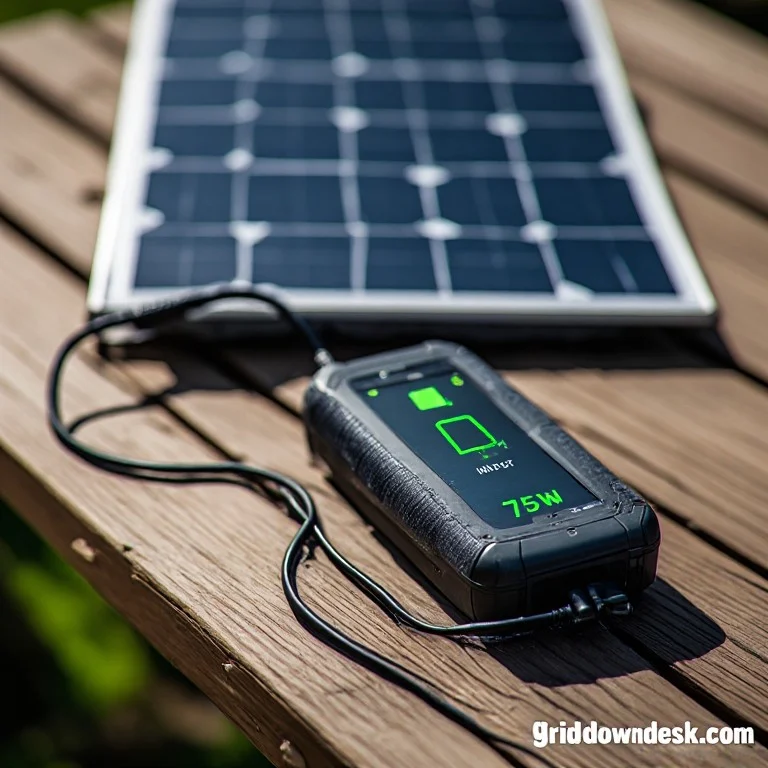
A standard 100W portable solar panel will produce about 60W to 80W in real-world conditions (accounting for angle, minor cloud cover, and MPPT controller efficiency).
- Daily solar harvest: 70W × 5 peak sun hours = 350Wh per day.
If your daily consumption is 250Wh, a single 100W panel will not only cover your daily needs but also add 100Wh of surplus back into the battery, creating a sustainable, indefinite off-grid loop during sunny weather.
Critical safety and setup tips for vehicles
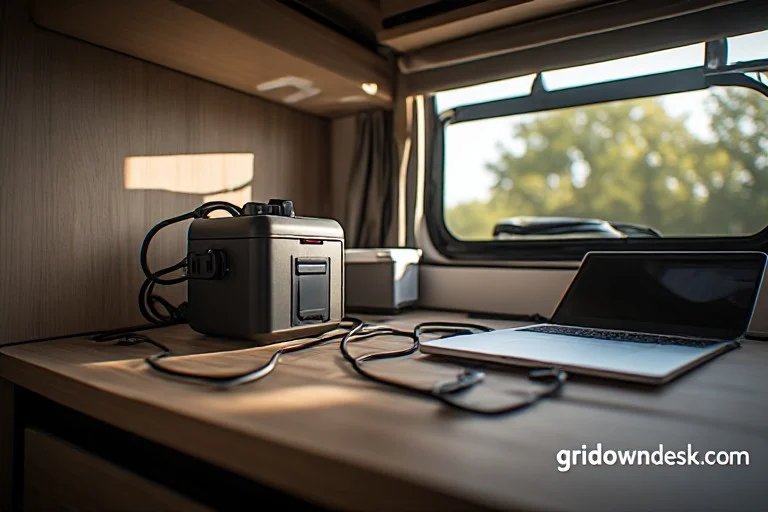
- Secure mounting: A portable power station is heavy. In the event of sudden braking or an accident, an unsecured unit becomes a dangerous projectile. Use heavy-duty Velcro, a custom wooden box, or a dedicated mounting bracket to secure it to the van floor or bench.
- Temperature management: Lithium batteries degrade rapidly in extreme heat. Never leave your power station in a closed van under direct summer sunlight. Keep it in a shaded, ventilated area.
- Cable quality: Use high-quality, thick 12V DC cables for your fridge. Thin, cheap cables cause voltage drop, which can trigger the fridge's low-voltage cutoff, causing it to cycle on and off unnecessarily and drain the battery faster.
- Battery maintenance: Even when not in use, lithium batteries self-discharge. If you store your van for the winter, leave the power station at a 60-70% charge. For comprehensive battery care instructions, see our guide on how to maintain and store your portable power station.
FAQ
Can I charge the power station from the van's alternator while driving? Yes, using the 12V cigarette lighter socket. However, it is slow (typically capped at 100W-150W due to vehicle fuses) and puts a constant load on the alternator. It is best used as a top-up during long drives, not as a primary charging method.
Do I need a pure sine wave inverter for van life? If you only use DC and USB ports, the inverter type doesn't matter. However, if you plan to plug in a laptop AC brick, a CPAP machine, or any device with a sensitive motor, pure sine wave is mandatory to prevent damage. Most reputable brands include this by default.
Can I expand my power station's capacity later? Many modern mid-to-high-tier power stations support expansion batteries. This is highly recommended for van life, as it allows you to start with a 1000Wh unit and upgrade to 2000Wh+ later without replacing the entire system and inverter.
Is it safe to sleep in the van with the power station running? Yes. Unlike gas generators, lithium portable power stations produce zero carbon monoxide or toxic fumes. They are perfectly safe for indoor use, provided they are not covered by blankets and have adequate airflow for their cooling fans.