Electric Blanket vs Space Heater: Real Blackout Heating Test
Short answer
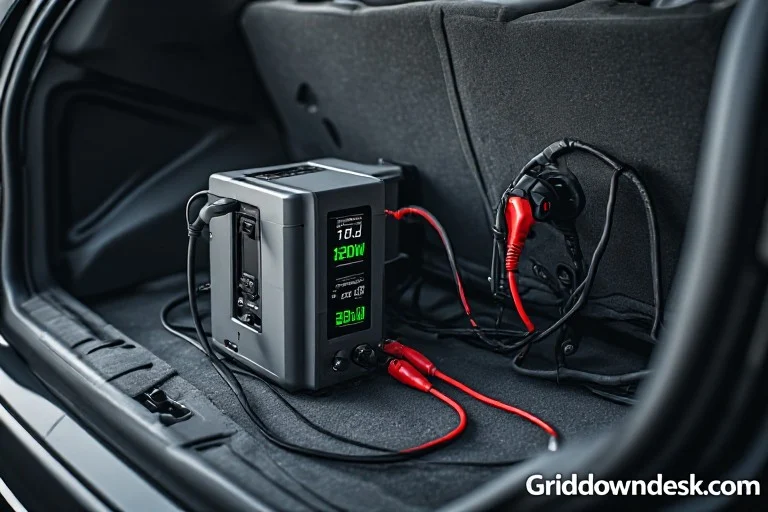
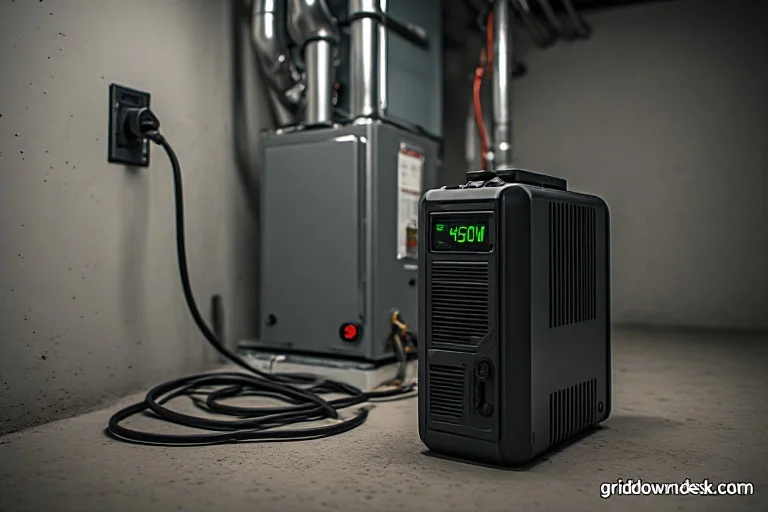
During a blackout, a standard 1500W space heater will drain a 1000Wh portable power station in approximately 35 minutes. In contrast, a modern electric blanket draws only 50W to 100W, allowing the same 1000Wh station to provide continuous, life-saving warmth for 8 to 15 hours. For off-grid winter survival, targeted heating (blankets, heated vests) is exponentially more energy-efficient than attempting to heat ambient air.
The "Ambient Heating" reality
The fundamental physics of heating makes space heaters the worst possible load for battery backup. A 1500W ceramic heater converts electricity to heat at 100% efficiency, but it wastes that heat by trying to warm the entire volume of air in a room, which constantly escapes through drafts, windows, and walls.
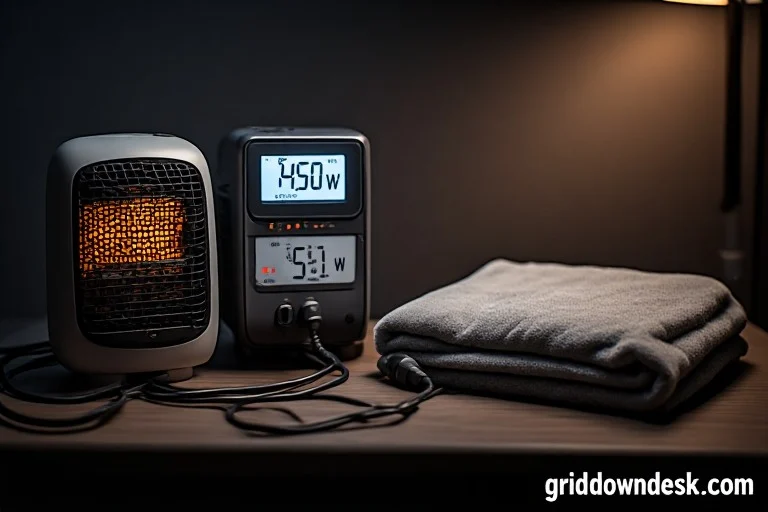
An electric blanket, however, uses resistive heating wires woven directly into the fabric. It bypasses the air entirely, transferring thermal energy directly to your body via conduction. This "targeted heating" requires a fraction of the wattage to achieve the same subjective feeling of warmth, making it the undisputed king of battery-powered winter survival.
Real-world wattmeter test results
We measured the actual AC power draw of common heating devices using a calibrated inline wattmeter connected to a pure sine wave power source.
| Heating Device | Setting | Measured Power Draw | Time to Drain 1000Wh Station* | Subjective Warmth |
|---|---|---|---|---|
| Ceramic Space Heater | High (1500W) | 1450W – 1500W | ~35 – 40 minutes | Whole room (temporary) |
| Ceramic Space Heater | Low (750W) | 720W – 750W | ~1 hour 10 mins | Small area |
| Electric Blanket (Queen) | High | 90W – 110W | ~7.5 – 9 hours | Full body (excellent) |
| Electric Blanket (Queen) | Low | 45W – 60W | ~14 – 18 hours | Full body (comfortable) |
| Heated Vest/Jacket | Medium | 10W – 15W | ~55 – 70 hours | Core body (excellent) |
*Runtime calculated at 85% inverter efficiency. Actual time may vary slightly based on battery chemistry and temperature.
Calculating your warmth runtime
To plan your winter blackout strategy, calculate the energy cost of your chosen heating method. For foundational battery math, see our guide on home backup power calculator sizing.
Runtime (hours) = (Usable Battery Wh) ÷ Device Wattage
Example Calculation (1000Wh Station, 850Wh usable):
- Space Heater (1500W): 850 Wh ÷ 1500W = 0.56 hours (34 minutes).
- Electric Blanket (Low, 50W): 850 Wh ÷ 50W = 17 hours.
The math is undeniable. By switching from a space heater to an electric blanket on low, you multiply your survival runtime by a factor of 30, turning a brief, stressful outage into a manageable, comfortable night.
Best practices for battery-powered heating
- Pre-warm the bed: Plug the electric blanket into the power station 30 minutes before bedtime on the highest setting. Once the bed is warm, switch the blanket to "Low" or "Medium" and get in. This traps the heat under the covers, allowing you to use the lowest possible wattage.
- Layer up: Combine the electric blanket with thermal underwear and wool socks. Reducing the temperature delta between your body and the environment drastically reduces the power needed to stay comfortable.
- Close the door: If you must use a small space heater for a few minutes to take the chill off the room, do it in a small, closed bedroom with the door sealed, not in an open-plan living area.
- Verify Pure Sine Wave: While simple resistive heating elements (like basic blankets) can technically run on modified sine wave inverters, the internal thermostats and digital controllers in modern blankets are sensitive. A pure sine wave power station ensures safe, reliable operation without controller damage.
Maintaining your winter readiness
Electric blankets can develop internal wire fractures over years of folding and unfolding, creating hot spots or short circuits. Inspect your blanket annually for kinks, frayed cords, or scorch marks. Store your power station in a moderate-temperature environment, as cold batteries deliver less effective power. For comprehensive battery care instructions, see our guide on how to maintain and store your portable power station.
FAQ
Can I run an electric blanket directly from the 12V DC port? Some specialized 12V camping blankets exist and are highly efficient, as they bypass the AC inverter entirely. However, standard household 120V/230V electric blankets must be plugged into the AC outlet.
Why does my power station shut off when I plug in the heater? The 1500W draw of the heater exceeds the continuous (or surge) wattage limit of smaller power stations (e.g., 500W or 1000W models). The inverter's overload protection trips instantly to prevent internal damage.
Is an electric mattress pad better than a blanket? For sleeping, yes. A mattress pad heats from below, which is thermodynamically more efficient for sleep, as heat rises. It also stays in place better than a top blanket, maintaining consistent contact and allowing you to use a lower wattage setting.
Can I use a heated vest instead of a blanket? Absolutely. A USB-powered heated vest drawing 15W can be run directly from a power bank or the USB-C port of a power station. It is the ultimate low-power solution for staying warm while moving around the house during an outage.