Heating Circulation Pump Blackout Power Guide
Short answer
To keep your heating system safe during a blackout, you must power the circulation pump with a pure sine wave UPS or portable power station. Modern high-efficiency (ECM) pumps draw only 5W to 50W, while older fixed-speed models draw 60W to 100W with startup surges up to 250W. A compact 300Wh to 500Wh pure sine wave backup will keep a modern circulation pump running for 6 to 15 hours, preventing boiler overheating and frozen pipes.
The overheating reality
When the grid fails, the most immediate danger to a private heating system is not the cold; it is the heat. If the circulation pump stops, the thermal energy generated by the boiler has nowhere to go.
In gas or solid-fuel boilers, this can cause the heat exchanger to overheat and the water to boil, triggering emergency pressure relief valves or causing catastrophic damage to the system. Conversely, in extreme cold, stagnant water in peripheral pipes can freeze and burst. Keeping the pump running, even at a minimal speed, is the single most critical action during a winter power outage.
Real-world pump power consumption
The type of pump you have drastically changes your backup power requirements. Check the nameplate on the pump housing.
Typical power consumption:
- Modern High-Efficiency (ECM) Pump (e.g., Grundfos Alpha, Wilo Yonos): 5W to 50W continuous. These pumps dynamically adjust speed and have very low startup surges.
- Older Fixed-Speed (AC) Pump (e.g., Grundfos UPS series): 60W to 100W continuous, with a startup surge of 150W to 250W.
- Boiler Control Board: 10W to 30W (must also be powered to monitor temperature and safety sensors).
Critical Note: The total load is the Pump + Boiler Control Board. For a modern setup, this is often under 60W total.
Calculating your heating runtime
Because the pump runs continuously during an outage to prevent stagnation, we calculate runtime based on a 100% duty cycle. For the foundational math, see our guide on home backup power calculator sizing.
Runtime (hours) = (Battery Capacity in Wh × Efficiency) ÷ Total Continuous Watts
Note: Use 0.85 efficiency for AC inverters. If your pump supports direct 12V/24V DC input, use 0.95 efficiency.
Example Calculation (Modern ECM Setup):
- Modern pump (20W) + Boiler control (15W) = 35W total.
- Power source: 500Wh pure sine wave UPS.
- Usable energy (AC): 500 Wh × 0.85 = 425 Wh.
- Runtime: 425 Wh ÷ 35W = ~12.1 hours.
If you have an older 80W fixed-speed pump, the same 500Wh unit will last: 425 Wh ÷ 80W = ~5.3 hours.
Best practices for heating backup
- Pure Sine Wave is Non-Negotiable: Modern ECM pumps contain sensitive microprocessors and variable-frequency drives. A modified sine wave inverter will cause the pump to buzz loudly, overheat, display error codes, and eventually fail. Always verify "Pure Sine Wave Output".
- Dedicated Circuit: Plug only the boiler and the circulation pump into this specific backup unit. Do not share it with high-draw appliances like refrigerators or well pumps, as their startup surges will trip the backup and shut down your heating.
- Lower the Pump Speed: If your pump has manual speed settings (I, II, III) or an auto-adapt mode, ensure it is set to the lowest effective setting during an outage. This minimizes wattage draw and extends battery life.
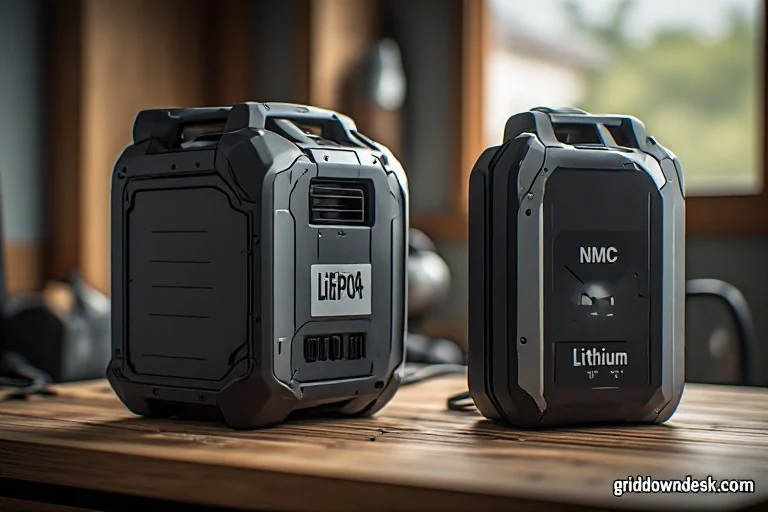
- Temperature Management: Boiler rooms can get very hot or very cold. Extreme heat degrades lead-acid UPS batteries rapidly, while extreme cold prevents LiFePO4 batteries from charging. Keep the backup unit in a moderate, ventilated area.
Maintaining your heating readiness
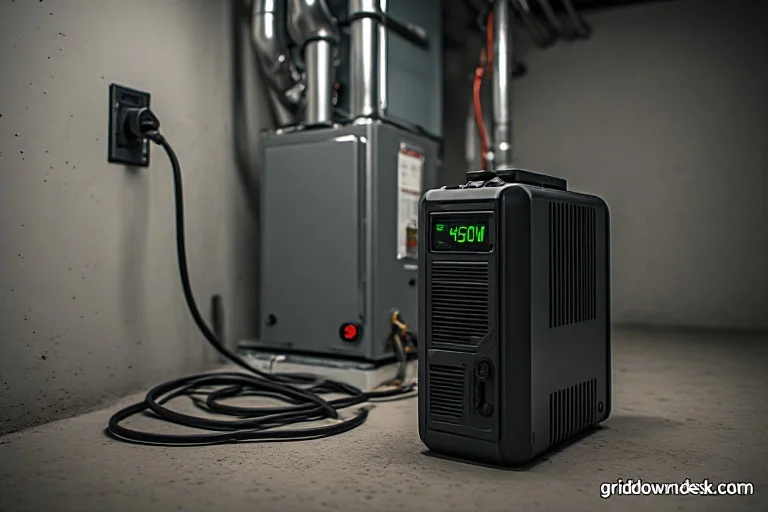
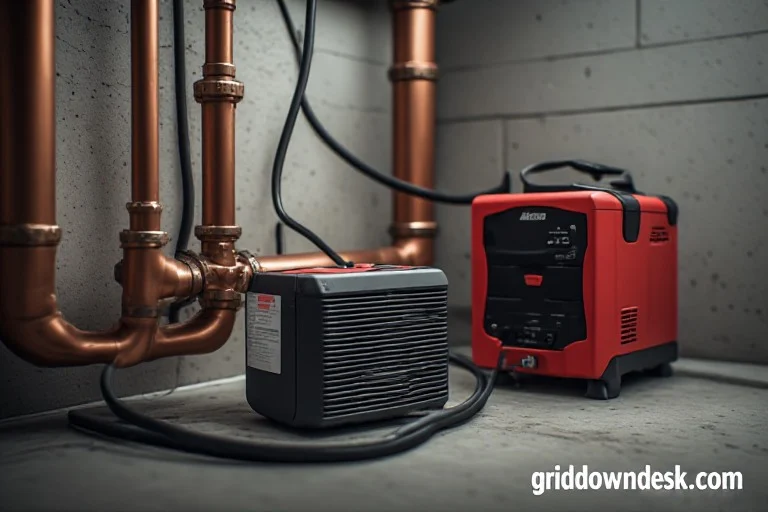
A backup unit sitting in a boiler room is subject to harsh conditions. Dust and humidity can accumulate. Wipe the unit's vents monthly and check the battery charge level every 2 to 3 months. For comprehensive battery care instructions, see our guide on how to maintain and store your portable power station (the same principles apply to UPS batteries).
FAQ
Can I use a car battery and an inverter for my heating pump? Yes, this is a very common and effective solution. Use a deep-cycle AGM or LiFePO4 car battery paired with a high-quality, pure sine wave inverter rated for at least 500W continuous. This is often cheaper and longer-lasting than a small portable power station.
Will the boiler restart automatically when grid power returns? Yes, in most modern systems. Once the UPS detects grid power restoration, it switches back to line power seamlessly. The boiler control board will detect the stable voltage and resume normal operation without requiring a manual reset.
What if my pump is a 3-phase 380V industrial model? Standard portable power stations and small UPS units cannot power 3-phase equipment. You will need a specialized 3-phase inverter system or a standby generator designed for industrial loads.
Why does my new ECM pump show a higher wattage spike occasionally? Even efficient pumps occasionally perform a self-cleaning cycle or a rapid speed adjustment to clear airlocks. This causes a brief, normal spike in power draw. Ensure your backup unit has at least a 20-30% wattage headroom above the pump's maximum rated draw to accommodate this.