Wi-Fi Bridge & Outdoor CPE Blackout Power Guide
Short answer
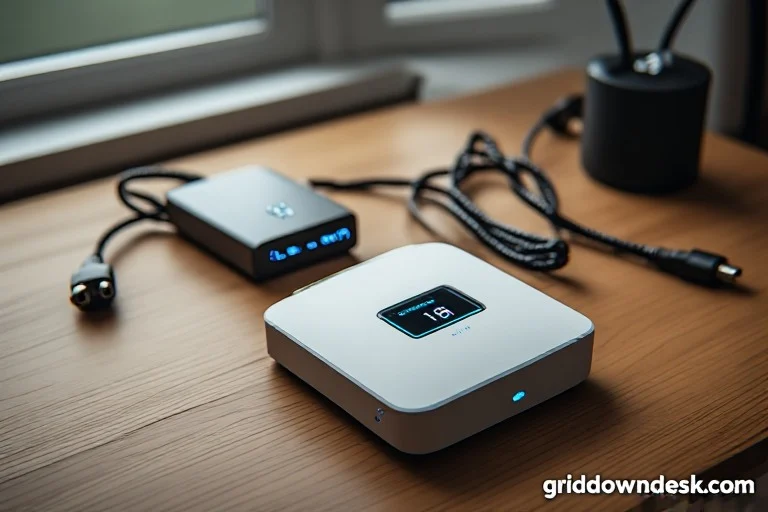
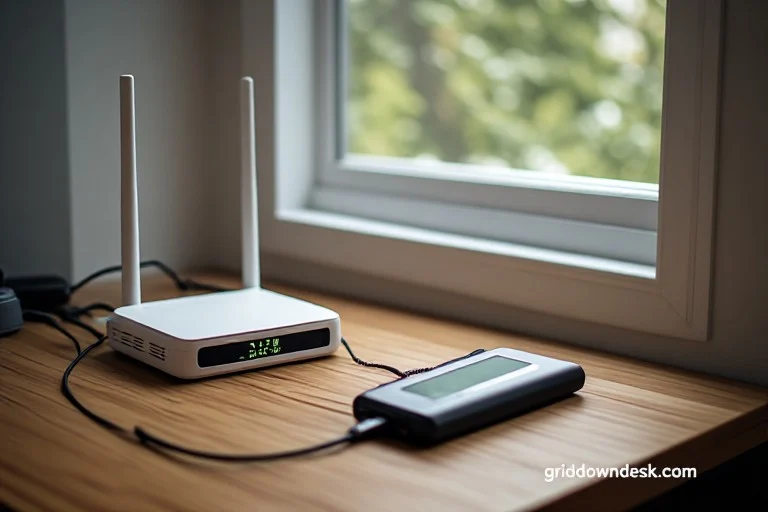
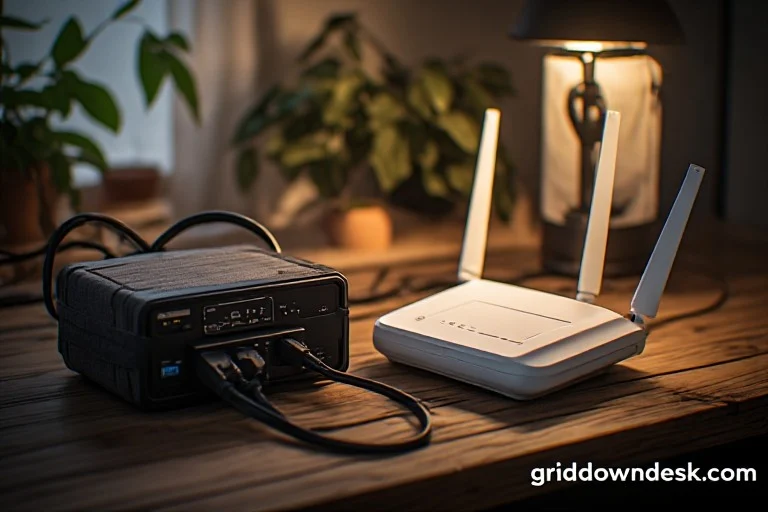
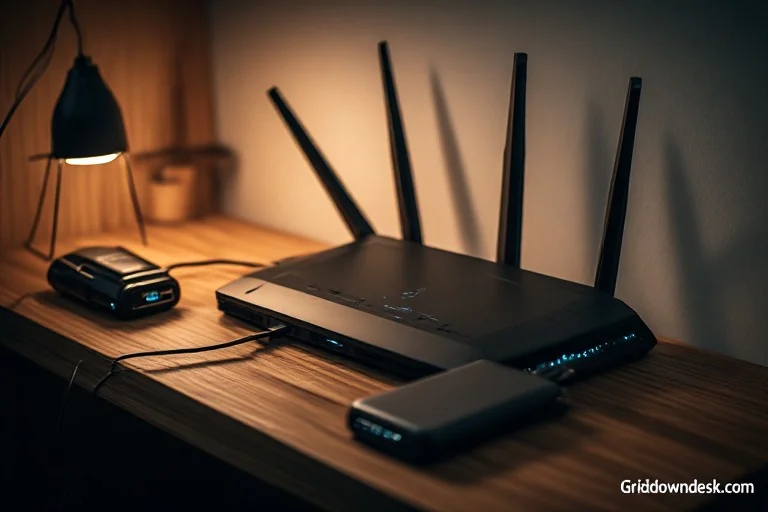
To keep a rural Wi-Fi bridge (PtP) or outdoor CPE antenna running during a blackout, you must power the PoE (Power over Ethernet) injector from a 12V or 24V DC source. A typical outdoor CPE draws only 5W to 12W. A standard 20,000mAh (74Wh) power bank can keep both the CPE and your indoor router alive for 6 to 10 hours. The critical factor is using a high-quality DC step-up converter to match the PoE voltage (24V Passive or 48V Active) to avoid massive power loss over long cable runs.
The "Long Cable" voltage drop reality
Rural internet setups typically involve a 15 to 30-meter Ethernet cable running from the indoor router/PoE injector to the antenna on the roof or mast.
When you attempt to power this setup from a 12V battery or power bank, a common mistake is to place the 12V source indoors and rely on the PoE injector to step up the voltage. However, pushing low-voltage, high-amperage power through a long, thin Ethernet cable (especially Cat5e) causes severe voltage drop due to wire resistance. By the time the power reaches the outdoor CPE, the voltage may have sagged below the minimum threshold, causing the antenna to constantly reboot or disconnect.
Real-world CPE power consumption
Outdoor wireless equipment is designed for efficiency, as it is often powered by solar setups in remote locations.
Typical power consumption:
- Entry-level CPE (e.g., Ubiquiti NanoStation, TP-Link CPE): 4W – 7W continuous.
- High-performance PtP Bridge (e.g., Ubiquiti PowerBeam, MikroTik Wireless Wire): 8W – 15W continuous.
- Indoor Router (connected to PoE LAN port): 8W – 12W continuous.
- Total Combined Load: 12W to 25W for the entire link.
Note: Power draw increases slightly in extreme cold, as the radio components may require more power to maintain signal integrity, and some advanced units have built-in heater elements (adding 10W-15W).
Calculating your bridge runtime
Because the load is remarkably low and continuous, even modest batteries provide excellent runtime. For the foundational math, see our guide on home backup power calculator sizing.
Runtime (hours) = (Battery Capacity in Wh × Efficiency) ÷ Total Load (W)
Example Calculation (Optimized DC Setup):
- Total load: 15W (10W CPE + 5W router).
- Power source: 20,000mAh power bank (74Wh).
- Efficiency: 0.85 (accounting for the DC-to-DC step-up converter inside the PoE injector and cable resistance).
- Usable energy: 74 Wh × 0.85 = 62.9 Wh.
- Runtime: 62.9 Wh ÷ 15W = ~4.2 hours.
If you upgrade to a dedicated 300Wh mini UPS, the runtime extends to: (300 × 0.85) ÷ 15W = 17 hours, easily covering a full day of outage.
Best practices for CPE blackout survival
- Use a Dedicated DC Step-Up PoE Injector: Instead of a standard AC PoE adapter, use a specialized 12V-to-24V (or 12V-to-48V) DC PoE injector. This allows you to plug the injector directly into your power bank's 12V output, bypassing the inefficient AC inverter entirely.
- Shorten the DC Run, Not the Ethernet Run: If possible, place the power bank and DC step-up injector close to the PoE injector, or even run a thicker 12V extension cable to the attic/crawlspace where the PoE injector lives. This minimizes the distance the low-voltage DC current must travel before being stepped up.
- Verify PoE Standard: Ensure your step-up injector matches your CPE. Ubiquiti typically uses 24V Passive PoE, while newer MikroTik or enterprise gear may require 48V Active (802.3af/at) PoE. Mismatching these will result in no power or damaged equipment.
- Disable Unused Radios: If your CPE is a dual-band unit acting as a client, disable the secondary radio in the admin interface to save 1W-2W of continuous draw.
Maintaining your rural connectivity
Outdoor CPE cables are subject to UV degradation and moisture ingress, which increases resistance and worsens voltage drop over time. Inspect the outdoor Ethernet entry point and connectors annually. Keep your indoor backup batteries charged and stored in a moderate temperature environment. For comprehensive battery care instructions, see our guide on how to maintain and store your portable power station.
FAQ
Can I power the CPE directly with a 24V battery instead of stepping up from 12V? Yes, this is the most efficient method. If you have a 24V LiFePO4 battery bank, you can wire it directly to a 24V PoE injector, eliminating the step-up converter's 5-10% efficiency loss entirely.
Will the Wi-Fi bridge reconnect automatically when power is restored? Yes. Once the PoE injector receives stable power again, the CPE will boot up, negotiate the link with the provider's tower, and pass the internet connection to your indoor router automatically.
What if my provider's tower also loses power? A backup power setup only protects your equipment. However, rural wireless towers are often equipped with robust battery or generator backups, making them more resilient than local fiber-optic distribution nodes during typical storms.
Is a 4G LTE modem a better backup than a Wi-Fi bridge? For short outages, a 4G LTE modem is simpler to power (as detailed in our 4G LTE modem blackout backup guide). However, if you have a strict data cap on cellular, or if cellular signal is weak in your area, keeping your unlimited rural Wi-Fi bridge alive via battery backup is the superior choice.